Last updated November 17, 2026


Free written scope consultation - allowances, timeline, and change-order rules on paper before a single trade is scheduled
Driveway & Pavers Warning Signs Every Homeowner Should Know
A single rocking paver in the middle of a driveway and a row of rocking pavers along one edge are both called “loose pavers.” They have nothing else in common. The first usually means the bedding sand has shifted under one unit. The second often means the edge restraint has failed and the entire field is creeping outward. One is a Saturday fix. The other is an excavation. That difference is the whole point of this guide. We’re going to teach you to read paver movement by pattern, not by panic, so you can tell a cosmetic nuisance from a structural failure – and know which one you’re looking at before you pay anyone in Torrance to guess for you.
Quick Answer
Paver driveway problems announce themselves through specific movement patterns: a sunken center zone points to base settlement, spreading edges point to restraint failure, and randomly rocking individual pavers usually mean bedding sand displacement. Dark joint sand that stays dark after rain is a drainage warning, not a stain. Vegetation in the joints is a nuisance on the surface and a base-layer alarm underneath. Reading the pattern tells you the cause, the repair, and the cost before anyone lifts a paver.
Styles & brands we work with
- Kitchen remodeling
- Bathroom remodeling
- Home additions & ADU
- Roofing
- Windows & doors
- Driveway & pavers
- Fence
Table of Contents
- The Paver Pattern Key: What Each Movement Tells You
- Center-Zone Depression: Base Settlement
- Edge-Zone Spreading: Restraint Failure
- Random Rocking Pavers: Bedding Sand Displacement
- Joint Sand Color After Rain: The Drainage Tell
- Vegetation Through Joints: Nuisance or Base Damage?
- Cracks in Cut Pavers: Thermal Movement vs. Sub-Base Failure
- Your Twice-Yearly Self-Inspection Protocol
The Paver Pattern Key: What Each Movement Tells You
Most homeowner guides hand you a checklist that treats every problem the same. Pavers don’t work that way. The location and pattern of movement is the diagnostic. Here’s the key we use when we walk a driveway, and the same key applies whether you’re in Old Torrance, Walteria, or Hollywood Riviera.
- Center-zone depression – the middle of the driveway sits lower than the edges. Cause: base settlement, often from a shallow aggregate base or poorly compacted subgrade. Repair: re-level the base, not the pavers.
- Edge-zone spreading – pavers along one side creep away from the field, joints widen in a fan pattern. Cause: edge restraint failure. Repair: reset or rebuild the restraint and re-key the field.
- Random individual rocking – isolated pavers rock when stepped on, neighbors are firm. Cause: bedding sand displacement or a single high/low unit. Repair: lift, re-sand, reset.
- Uniform dark joints after rain – joint sand goes dark and stays dark in patches. Cause: water sitting under the surface. Repair: diagnose the slope and drainage path.
- Cracks along a straight cut line – pavers crack where they meet a border or cut. Cause: thermal movement against a rigid element, or a failing sub-base. The distinction matters, and we cover it below.
Each of those is a different job. We’ve built and repaired paver driveways across the South Bay long enough to know that the pattern tells you the trade, the material, and roughly the size of the invoice before anyone picks up a tool. That’s the difference between a written price and an estimate that moves.
Center-Zone Depression: Base Settlement
When the middle of your driveway sags and the edges stay put, the pavers aren’t the problem – what’s under them is. A paver sits on roughly an inch of bedding sand, which sits on an aggregate base, which sits on native soil. If the aggregate base was laid too thin or not compacted in lifts, the weight of cars works the soil underneath. The surface doesn’t crack the way concrete does; it settles in a slow bowl. Water then pools in that bowl, which accelerates the settlement. It’s a loop, and it runs in one direction.
In Torrance, this shows up most often on driveways over original soil that was never proofrolled, especially in the older tracts where the base is shallower than the parking loads now demand. A driveway holding two SUVs and a street-parked third car puts more concentrated load on that base than the builder planned for in 1958.
What to check:
- Lay a straightedge (a 6-foot level works) across the driveway in three places – near the garage, mid-run, and near the street.
- Measure the gap under the middle. Anything over about 3/8 inch across 6 feet is worth a professional look.
- Hose the driveway and watch where the water runs. If it pools in the center after 30 minutes, the bowl is real.
- Photograph the straightedge and the gap with a tape measure in frame.
Re-leveling the base means lifting and re-laying the paver field, not just adding sand on top. Sand on top of a settled base hides the problem for one season and shows it again the next.
Edge-Zone Spreading: Restraint Failure
Pavers along one side of the driveway creep away from the field. The joints fan open like a hand of cards. The border looks like it’s leaping toward the lawn. This is edge restraint failure, and it’s one of the most misread paver problems on a Torrance driveway, because the pavers look fine while the whole field is quietly moving.
Paver driveways hold themselves together through interlock – the friction between units and the compacted joint sand. The edge restraint is what stops the field from spreading under load. When that restraint fails – a plastic edge that cracked, a concrete curb that settled, a spike that pulled out – the pavers have nothing holding them in compression. Traffic pushes them outward. Joints widen. Sand drains out through the widening gaps. The field loosens.
Signs you can spot in five minutes:
- Joints at the edge are visibly wider than joints in the field – often two to three times as wide.
- The outer row of pavers overhangs the edge restraint or rises above it.
- You can press the edge pavers sideways with your hand and feel movement.
- Grass or soil has crept over the border, or the border has dropped below the lawn grade.
Restraint repair is genuinely cheaper than base repair, which is why the distinction matters. But left alone, edge spread becomes base failure becomes full reconstruction. If you’re replacing the same driveway you may as well know where the field ends and the lawn begins – fence work in Torrance often shares that line, and a fence post footing set too close to the driveway edge can be the thing that starts the whole failure.
Random Rocking Pavers: Bedding Sand Displacement
A few pavers here and there rock underfoot while their neighbors stay firm. This is usually the smallest problem in the guide, and it has two common causes. Bedding sand has migrated out from under the unit, or the unit is sitting slightly proud of its neighbors because a chip or debris has worked its way into the layer. Either way, the field is still interlocked; the problem is local.
You’ll see this in any Torrance driveway where a car parks in the same spot every night – the repeated load works sand out from under the front tires first. In Torrance’s climate the sand cycle is seasonal: wet winters swell the joint sand, dry summers shrink it, and a few thousand hot-cold cycles later a unit is rocking. That cycle is why “fix the one paver” often means “re-sand the whole driveway,” which is a different scope and a different price.
How to tell local from systemic:
- Number the rocking pavers in chalk and note the date.
- Re-check in 90 days. One to three rockers, isolated – likely sand. Six or more, spreading outward from one area – likely a base issue below.
- Press the neighbors. If they’re firm, you’re in local-repair territory. If the rockers form a cluster, zoom out and look at the whole zone.
A local repair is genuinely affordable. It’s the pitch for a full driveway rebuild you should question.
Joint Sand Color After Rain: The Drainage Tell
Joint sand darkens when it’s wet. That’s normal. What’s not normal is joint sand that stays dark for days after a rain while the rest of the driveway has dried – or sand that goes dark in irregular patches after a light sprinkle, tracing a shape you can see from the street. That’s water sitting under the paver field where it shouldn’t, and it’s a drainage warning disguised as a cosmetic issue.
Pavers are permeable in the sense that water runs through the joints into a base designed to carry it away. When the base stops carrying water away, the water finds the weak spots and sits there. Torrance gets its rain in concentrated storms between November and March, and a driveway that drains on the surface but holds moisture in one zone will show that zone in dark joint sand by February. The pump or the drain is the answer, not another bag of sand on top.
What to look for:
- Patches of joint sand that stay dark two or more days after other areas dry.
- Moss, algae, or a green tint in shaded areas that never fully dry.
- A musty smell near a drain or at the low edge of the driveway.
- Efflorescence – a white powdery bloom – on the paver faces. That’s salts pushed to the surface by water moving through the unit.
Any one of those is worth a proper moisture diagnosis. Call our crew at (888) 349-6729 for a documented look at what the water is doing under the surface – the visit comes with a photo record, not a guess.
Vegetation Through Joints: Nuisance or Base Damage?
Weeds in driveway joints are a Torrance fact of life – a paver joint is one-third sand by volume, and sand is a seed bed. The question isn’t whether vegetation grows. It’s whether the root system has reached the base layer and started breaking it apart.
The surface case: a scatter of small weeds you can pull by hand, no visible depression around them, joints still tight, no sand loss. That’s a nuisance. Pull, re-sand, and keep joint sand topped off. Joints that stay full don’t hold weeds.
The base case: larger established plants – dandelions, thistle, or anything woody – with a visible low spot around the base of the plant, visible sand loss, or a cluster of pavers that rock when you step near it. That plant’s root system has opened a path through the joint sand into the base. Water follows that path. Sand washes down it. The base loosens under the pavers around it. This is a repair job, not a weeding job, and the “just pull it” instinct is what lets it run for another year.
If you’re dealing with vegetation-and-water at the driveway edge, a new or rebuilt fence line can move the whole boundary problem at once. Fence installation in Torrance and the paver edge share soil, drainage, and often one failed retaining element – there’s no good reason to fix one and ignore the other.
Cracks in Cut Pavers: Thermal Movement vs. Sub-Base Failure
A crack in a single cut paver along a straight border is a specific clue. It tells you something distinctive: the paver was cut to fit and something is moving against it. The critical question is what’s moving, and the answer changes whether you replace pavers or excavate.
Thermal movement cracks the unit, not the field. Paver units expand and contract with heat, and a cut paver jammed tight against a rigid element – a concrete wall, a steel edging, a raised curb – has no room to move. On a 100-degree Torrance afternoon, it cracks. The field around it is intact. The fix is to replace the unit with a proper joint gap. Replacing pavers, not excavating.
Sub-base failure cracks the pattern, not the unit. Multiple pavers in a line crack together, cracks run at consistent angles, and the field around them deflects. This is base movement, not thermal stress, and it requires lifting the field to inspect and rebuild the base under the affected zone. Excavating, not paver replacement.
The distinction matters because the two jobs differ in price by thousands, and the standard a contractor is working to is what sets the price honestly. Whether you’re comparing written estimates or scheduling the job, we’ve built our number on reading that distinction first. It’s the same logic that runs through every paver job we quote – the Driveway & Pavers in Torrance service page spells out the scope the way we put it on paper.
Your Twice-Yearly Self-Inspection Protocol
A driveway, like a roof, rewards a homeowner who looks at the right time of year. In Torrance, run this inspection in late spring (after the winter moisture has worked and dried) and in late fall (before the rains). It takes about 20 minutes, and the photos you collect can support a warranty claim, a contractor dispute, or a written repair quote later. This is the document set we’d want from a customer before we quote a repair.
- Walk the perimeter. Note any joints wider than the field or any overhang at the edge restraint. This is the edge-spreading check.
- Straightedge the field. Six-foot level, three places, gap measured in 1/8 inch. Photograph every measurement with a tape in frame.
- Rain test. After a real storm, photograph any joint sand that stays dark while the rest dries. Note the date and time.
- Weed and depression check. Note any plant that has a low spot around it, and photograph the spot separately. There’s the nuisance, there’s the base problem.
- Rocking paver count. Chalk or mark each rocker and count them quarterly. A count that grows is a pattern; a count that stays at one is a repair.
- Straight-line crack count. Photograph any cracked paver with its neighbors in frame, so the pattern – single unit or field – is recorded.
- Keep the file. Date everything, keep the paver brand, keep the original installation photos if you have them, keep your written quotes. That file is what separates a warranty claim from a contractor’s word against a homeowner’s memory.
Don’t re-sand after a rain until the field has fully dried. Sand packed into wet joints under a wet surface traps moisture and causes efflorescence that takes weeks to clear.
Common Mistakes to Avoid
- Treating all loose pavers as the same problem. A single rocker and an edge-row spread are different jobs with different receipts. Diagnose by pattern first, price second.
- Top-dressing joints with sand after a rain. Wet sand traps moisture and pushes efflorescence. Wait for full dry weather, then re-sand.
- Pulling a weed and calling it done. If the plant left a depression or sand loss, the base has a void. Pulling the weed leaves the void open to water.
- Caulking the cracks. Sealing a cracked paver line traps water under the field where it should be draining. It slows the visual nuisance and speeds the base failure.
- Adding sand over a settled center. Sand on top of a bowl is a one-season fix. The bowl comes back, and the next estimate is bigger.
- Ignoring edge spreading because “it’s on the lawn side.” Edge restraint failure is the most common prelude to full field failure. It’s cheaper now than later, every time.
- Booking a repair without a written scope. Torrance has hundreds of paver installers and driveway crews, at every price. A verbal scope and a call-for-a-quote don’t give you a number you can hold anyone to.
The fix for the last one is simple. Under Clause 1 of The Haven Standard, every Rowan project – parking pad, retention wall, full driveway rebuild – carries a flat written price and a written scope before anyone starts. No change proceeds without a signed change order. That’s the discipline that’s kept our project costs within a few percent of the agreed number across 4,000-plus jobs, since the number on the page is the number on the invoice.
See the difference
 Before
 After
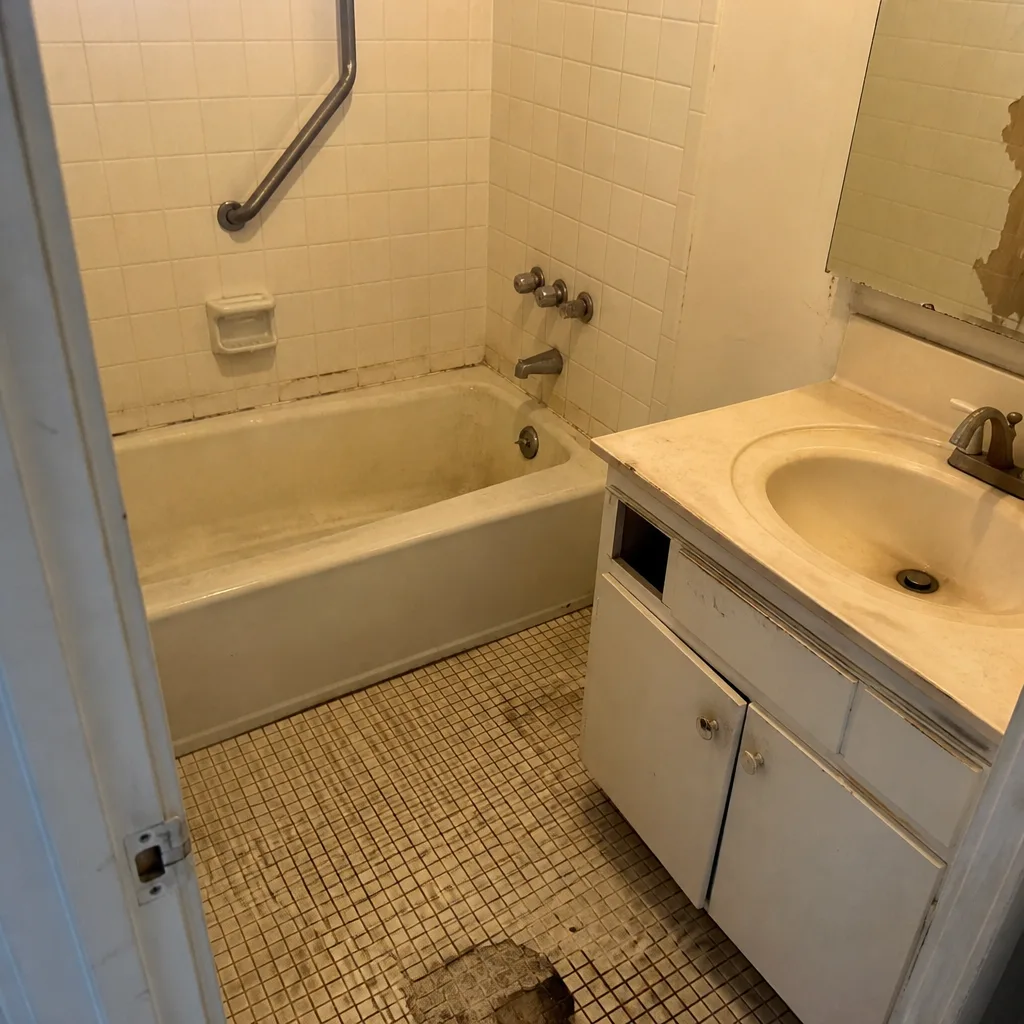 Before
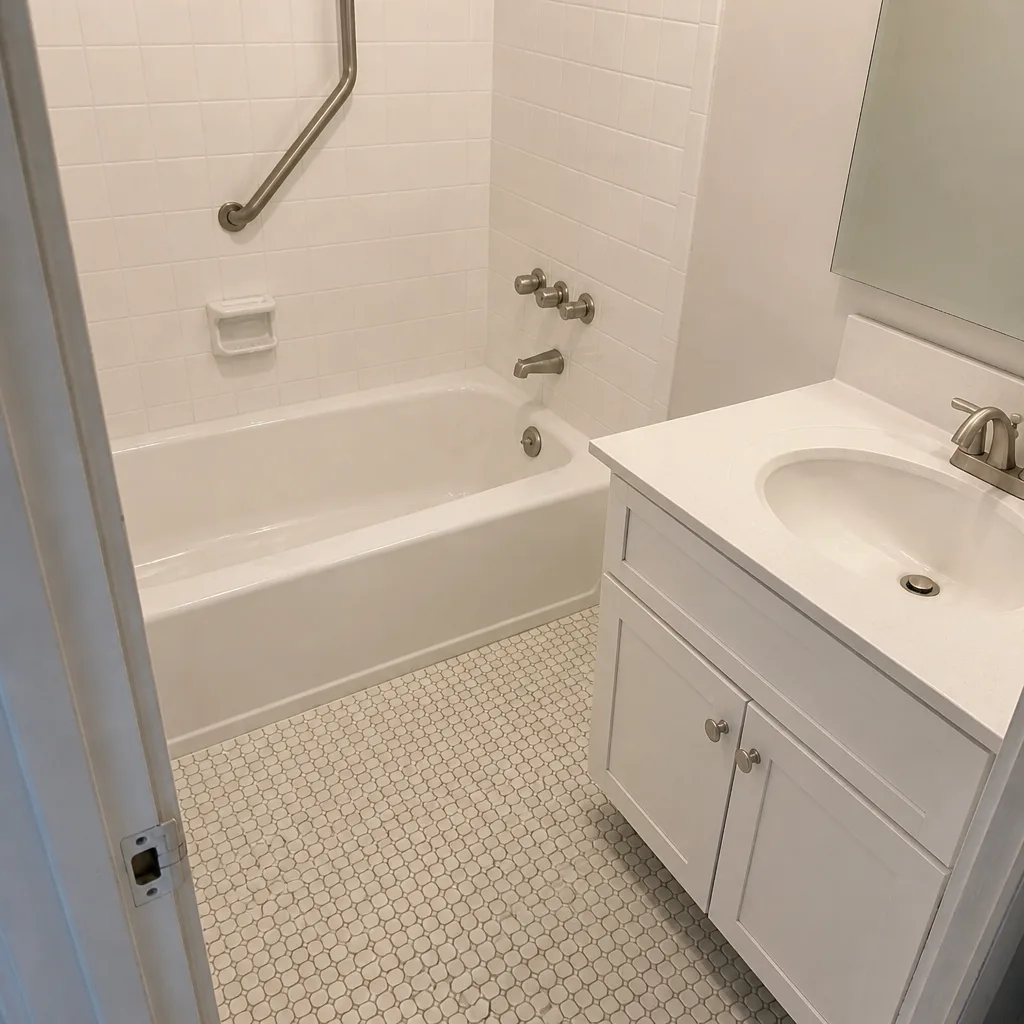 After
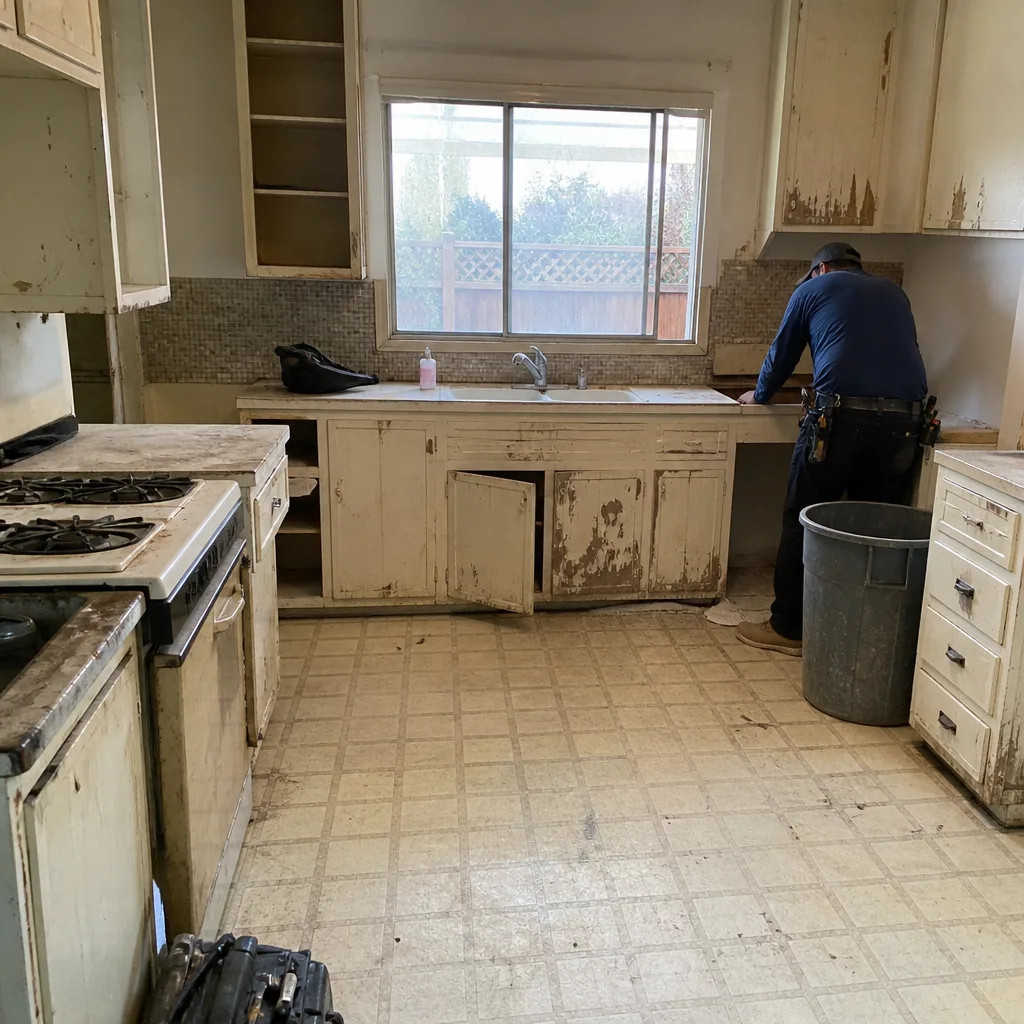 Before
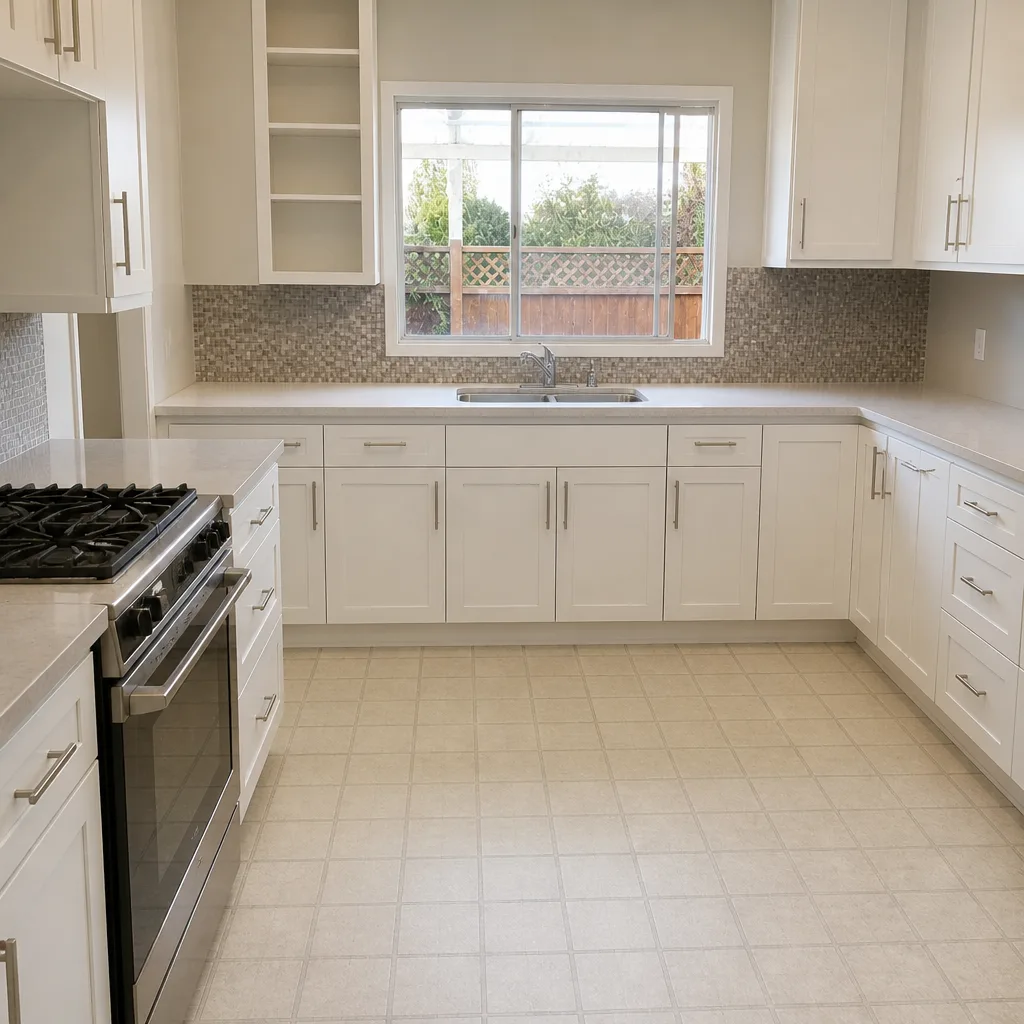 After
When to Call a Professional
Some paver issues are homeowner fixes – a small number of rockers, joint sand top-off, weeding. Some are not. Call a professional when you see any of these in Torrance:
- Center depression over 3/8 inch across six feet, or a bowl where water pools for more than 30 minutes.
- Edge pavers moving sideways under hand pressure, or a fan pattern at the restraint.
- Joint sand that stays dark two or more days after rain, or efflorescence spreading across the field.
- More than three rocking pavers, or a rocking cluster.
- Established vegetation with a depression or sand loss around the base.
- Multiple cracked pavers along a line, or field deflection near the cracks.
Ready to get a written number before you commit? Rowan Construction Group Torrance offers free estimates in Torrance – and a free second opinion on any written estimate you already have, line by line – backed by the 365-Day Done Right Promise. Our technicians have up to 19 years of experience, and every visit comes with a documented photo record as a standard deliverable. Call (888) 349-6729 to schedule your free estimate.
Frequently Asked Questions
In Torrance, a local bedding-sand reset for a handful of rockers typically runs a few hundred dollars, an edge-restraint repair runs in the low four figures, and a full base rebuild on a two-car driveway runs five figures. The range is wide because the causes are different – which is why the pattern key matters before you price the job. Call (888) 349-6729 for an exact quote – estimates are free.
No, if the contractor works the way we do. Under Clause 1 of The Haven Standard, the price is written before anyone starts, and no change proceeds without a signed change order. A written scope and a signed change-order discipline are what keeps the number on the page and the number on the invoice within a few percent. Call (888) 349-6729 to schedule your free estimate.
A local sand reset is usually half a day. Edge restraint repair runs one to two days. A center-zone base rebuild is typically three to five working days on a standard two-car Torrance driveway, plus curing time before vehicles. Written schedules come with the written price, so you know what to plan for. Call (888) 349-6729 for a free estimate with a schedule.
Yes. Permits are pulled and inspections passed on the scope that requires them, and the written price you receive is the one that holds through inspection. Torrance residential drives often touch grading and site-drainage limits, and the permit requirement depends on the scope. Call (888) 349-6729 for a free estimate and a permit review.
A repair addresses the paver and restraint layer – reset, re-sand, re-key, or rebuild a local edge. A rebuild lifts the full field, rebuilds the aggregate base and subgrade, and re-sets the paver system from the soil up. The pattern key above tells you which one you need: local rockers and edge spread are usually repair; center depression and field deflection require a rebuild. Call (888) 349-6729 for a free estimate that spells out which we recommend and why.
Usually yes. Paver units survive a base failure more often than people expect, especially rigid manufactured units from brands like Belgard and Techo-Bloc. The base is rebuilt, the units are cleaned and re-set, and the result is a driveway that performs like new, at a fraction of the cost of a full material replacement. Call (888) 349-6729 for a free estimate on a base rebuild using your existing pavers.
The Bottom Line
Paver driveways fail through specific patterns, not general “damage.” A center depression means base settlement. Edge spreading means restraint failure. Random rockers mean bedding sand. Dark joints mean drainage. Vegetation with a depression means base compromise. Cracks along a cut line mean thermal movement, and cracks across a field mean sub-base failure. The pattern tells you the cause, the cause tells you the repair, and the repair tells you the price. Every one of those reads better in spring and fall, photographed, with the date on the file. When the pattern points to base or field work, that’s a written estimate before anything else – and a free second opinion on any quote you already have.
Our technicians have up to 19 years of experience across the seven residential trades we run, including Fence Installation in Torrance and Home Additions & ADU in Torrance where driveways and site drainage meet them. If you’re planning the full property – driveway, fence, addition – the Rowan Construction Group Torrance home page spells out the seven trades and the same written-price discipline on every one. Bring a competitor’s quote if you have one; we’ll review it line by line at no charge.
Ready to turn a pattern into a number? Call Rowan Construction Group Torrance at (888) 349-6729 to schedule your free estimate. Licensing, service areas, and crew details are confirmed on the written estimate, and your scheduled visit includes a background-checked technician and a documented photo record. If it’s not done right, our 365-Day Done Right Promise makes it right – the terms are on the page, not in an asterisk.
Written by the team at Rowan Construction Group Torrance.