Last updated November 17, 2026
Free written scope consultation - allowances, timeline, and change-order rules on paper before a single trade is scheduled
How Long Does Fence Installation Take? Timelines and What to Expect
A 150-foot wood privacy fence takes roughly 6 to 10 labor hours to install. The permit, the 811 utility mark-out, and the material lead time in front of it can add 10 to 18 calendar days. Most contractors quote only the first number. That gap between the install and everything preceding it is where projects actually slip, and it is why two homeowners on the same Torrance block can sign contracts the same week and see fences go up three weeks apart. What follows separates the timeline into its real phases, with hour counts and calendar days for each, so you can read a contractor’s schedule and know whether it holds water.
Quick Answer
Fence installation itself usually takes one to three working days depending on length and material: a standard 150-foot wood fence is a single day for an experienced crew, while a block wall or a long vinyl run can stretch to three. The full project from signed contract to final walkthrough typically runs two to four weeks in Torrance, because permit review, the required 811 utility locate, post concrete cure time, and material lead times all sit in front of the install crew’s first day on site.
Styles & brands we work with
- Kitchen remodeling
- Bathroom remodeling
- Home additions & ADU
- Roofing
- Windows & doors
- Driveway & pavers
- Fence
Table of Contents
- The Five Phases of a Fence Project
- Phase 1: Permit Application and Review
- Phase 2: The 811 Utility Locate (Legally Required)
- Phase 3: Material Lead Times by Fence Type
- Phase 4: Installation Day, in Labor Hours
- Phase 5: Concrete Cure and Inspection
- How Torrance Lot Conditions Add Time
- What a Signed Project Schedule Should Contain
The Five Phases of a Fence Project
Every fence project moves through the same five phases, and only one of them involves anyone swinging a hammer. Understanding the sequence is the difference between a homeowner who can plan around a date and one who is surprised on a Friday afternoon.
- Permit application and review – most Torrance fences over six feet, and any fence on a corner lot near a sight line, need a permit before work starts.
- 811 utility locate – a free but mandatory call that marks buried gas, electric, water, and communications lines before any post hole is dug.
- Material procurement and delivery – stock items arrive in days; special-order panels and custom block can take weeks.
- Installation – the visible work, measured in labor hours rather than calendar days.
- Cure and inspection – post concrete needs to set before panels or rails go up, and permitted work needs a final sign-off.
Notice that phases one through three are the ones that can run in parallel or in sequence, and getting them wrong is what blows a deadline. When we quote a fence project, the written scope includes a calendar for each phase, not a single optimistic finish date. That is a discipline that carries over from every trade we run, from Rowan Construction Group Torrance home projects to the smallest fence job.
Phase 1: Permit Application and Review
Permit review in Torrance typically runs 5 to 10 business days for a standard residential fence, and longer if the property sits in a historic overlay or a hillside zone where additional review applies. The fence height matters here: fences up to six feet in a rear or side yard are commonly permitted over the counter or through an online portal, while anything taller, or a front-yard fence, often needs a plan check. Corner lots carry their own rule about visibility triangles at the intersection, which can force a height reduction or a setback on one run.
The mistake homeowners make is treating the permit as the contractor’s private business. It is not. The permit is a public record with the applicant’s name and the approved scope on it, and you should ask for the permit number before installation begins. If a crew shows up without one, you are the one exposed to a stop-work order and, worse, a fence that has to come down.
Two things shorten this phase: having a current survey or plat showing the property lines, and having your neighbor’s acknowledgment on a shared-line fence in hand before you apply. In Torrance, where lots in neighborhoods like Old Torrance and the older tracts near downtown were platted tightly, a one-foot discrepancy on a shared line is common and worth resolving before, not after, the permit is pulled.
Phase 2: The 811 Utility Locate (Legally Required)
California law requires anyone digging to call 811 and have underground utilities marked before excavation. The service is free, but it is not instant: the standard window is two working days from the call, and in busy months around Torrance it can stretch to three. A contractor who tells you the locate “isn’t necessary for a fence” is telling you something important about how they operate.
What the locate actually does is protect you from the two expensive outcomes. The first is striking a gas or electric line, which is a safety event and a repair bill with your name on it. The second is the quieter one: a locate that flags an irrigation line or a fiber run across the exact post line forces a layout change, which means re-measuring and sometimes re-ordering material.
The locate also has a shelf life. Marks fade after a couple of weeks of sun and sprinklers, and if your project stalls waiting on materials, the marks can age out before digging starts. A well-run schedule calls for the locate to happen after materials are confirmed in transit, not before.
Phase 3: Material Lead Times by Fence Type
Material lead time is the phase most often quoted wrong, because it depends entirely on what you are building. Here is how the common fence types compare:
- Pressure-treated wood privacy fence – stock items at most suppliers, typically 2 to 5 business days to the site. Cedar runs slightly longer when a specific grade is specified.
- Vinyl and composite panel fence – 5 to 10 business days for standard colors, 2 to 4 weeks if you want a non-stock color or a matching gate.
- Chain-link – usually the fastest, 2 to 5 business days, though a custom gate or a large commercial run adds time.
- Block wall and masonry fence – 1 to 3 weeks depending on block availability and whether a decorative cap or custom color is specified. This is the category where special-order delays are most common.
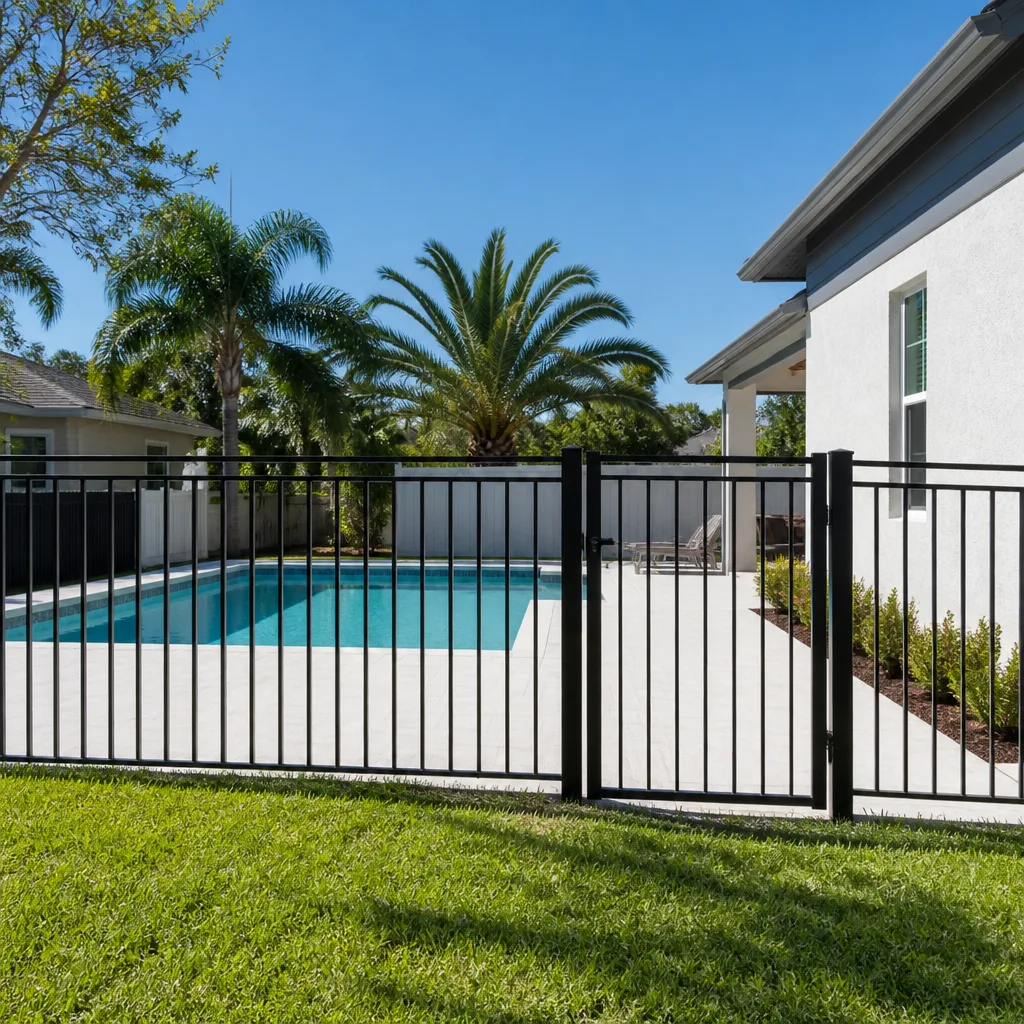
- Ornamental steel and aluminum – 2 to 4 weeks for fabricated panels and gates.
The timeline killer here is a homeowner approving a special-order panel color on a Friday, then having the installation crew scheduled for the following Monday because the contractor’s calendar had an opening. The crew shows up, the wrong material is not on site, and two weeks evaporate. We build the schedule from the material delivery date backward, so the crew’s first day is anchored to the last day of waiting rather than hoping the two line up.
Phase 4: Installation Day, in Labor Hours
This is where the honest numbers live, and where vague “one to three days” estimates fall apart. Labor hours scale with length, height, material, and how many posts you are setting. For a typical residential run of about 150 feet:
- Wood picket or privacy fence – 6 to 10 labor hours, roughly one working day for a small crew.
- Vinyl panel fence – 8 to 12 labor hours, because panel and post alignment takes more care than nailing pickets.
- Chain-link – 5 to 8 labor hours for a standard installation, faster where the ground is clear.
- Block wall – 2 to 4 working days depending on height and the number of footings, since masonry cures between courses.
- Ornamental steel – 8 to 12 labor hours for panels and posts, plus gate hang time.
Those hour counts assume clear access, no demolition of an old fence, and soil that accepts a post hole without a fight. Add 20 to 40 percent to every number above if the old fence has to come down first, or if you have root-bound soil or an existing concrete footing to break out, both of which are common in established Torrance neighborhoods.
Phase 5: Concrete Cure and Inspection
The single most misjudged step in fence installation is post concrete. Posts are set in concrete, and the concrete needs to harden before rails, panels, or gates go on. The practical cure time is 24 to 48 hours depending on mix and weather, and in a Torrance summer the surface can look set while the interior is still green. A crew that sets posts in the morning and hangs panels the same afternoon is taking a shortcut you will pay for two winters from now, when the fence starts leaning.
If the fence was permitted, a final inspection follows installation. Torrance inspections for a standard fence usually schedule within 1 to 3 business days of the request. Ask for the inspection result in writing, because the walkthrough is your proof that the height, setbacks, and footing depth match what was approved. That is the same principle we apply on Driveway & Pavers in Torrance work: the documentation at the end is as important as the work itself.
How Torrance Lot Conditions Add Time
Torrance has a few lot-level characteristics that genuinely add hours, and they show up in the older neighborhoods more than newer ones.
- Clay-heavy soil. Much of the South Bay sits on expansive clay that tightens in dry weather and swells after rain. Post holes that would take a minute in sand can take five in clay, and deeper footings are often warranted to resist frost-heave-style movement. A 150-foot run can gain half a day on soil conditions alone.
- Old concrete footings. Forty- and fifty-year-old fences left behind footings that are now buried. Breaking them out requires a jackhammer and disposal, and a contractor who discovers them mid-job has a legitimate reason to slow down. Ask in advance whether the quote includes footing removal.
- Shared property lines. A fence on a shared line means coordinating with a neighbor who may want something different. In tight Torrance lots near Old Torrance and the neighborhoods around Wilson Park, this coordination alone can add days, so start the conversation early.
- Access constraints. Narrow driveways and tight side yards make material staging slower. A block wall that needs a skid steer will take longer on a lot with no access behind the house.
None of these are deal-breakers, but they are why a quote from someone who has never built a fence in Torrance should be treated as a starting point rather than a promise.
What a Signed Project Schedule Should Contain
A schedule is a contract term, not a wish. Here is what to require in writing before you sign:
- Every phase with a start and end date, not a single finish date. Permit submitted by date, locate called by date, materials delivered by date, install start and end, inspection requested.
- The material lead time assumption spelled out. “Standard pressure-treated pine, delivered by [date]” is honest. “Materials are ordered” is not a schedule.
- The cure window named. The schedule should say posts are set and cured before panels are hung, with the expected buffer.
- The inspection date or the request date, whichever applies, and who is responsible for attending.
- A change-order clause. Under Clause 1 of the Haven Standard, the price is written before anyone starts, and no change proceeds without a signed change order. That applies to schedule changes, not just money.
- Weather and sequencing assumptions. If the schedule assumes no rain in a particular week, say so.
We put all six in writing on every fence project, the same way we do on a full Fence Installation in Torrance scope. If a contractor cannot produce a document like this, the finish date is an estimate, not a commitment.
Common Mistakes to Avoid
- Scheduling the install before materials are confirmed in transit. A crew with no materials on site burns half a day and reschedules, and you lose two weeks. Order first, schedule second.
- Calling 811 the day before digging. The locate takes two to three business days minimum, and calling late pushes the whole job back.
- Assuming the fence height is fine. Anything over six feet, or in a front yard, typically needs a permit in Torrance. An unpermitted fence can be ordered removed during a resale inspection.
- Hanging panels the same day posts are set. Concrete needs 24 to 48 hours. A crew that skips the cure window is selling you a fence that will lean.
- Forgetting footing removal in the quote. Old concrete below grade is real labor. A quote that doesn’t mention it will come back as a change order.
- Not talking to the neighbor on a shared line first. One disagreement about fence height or material can stall a project for a week in a tight Torrance lot.
- Accepting a verbal schedule. Get the phase-by-phase dates in writing, including the date the permit was submitted.
See the difference
 Before
 After
 Before
 After
 Before
 After
When to Call a Professional
Some fences are weekend projects. Many in Torrance are not. Call a professional if any of the following applies: the fence is over six feet or on a shared property line, the soil is clay-heavy or the lot has old footings, the fence is a block wall or an ornamental steel run, or the fence will be inspected and permitted. The stakes are higher than a leaning picket. Buried gas, electric, and fiber lines sit exactly where post holes go, and a strike is a safety event. Utility locating exists because of that. Skip the DIY when the risk involves utilities or permitted work. Rowan Construction Group Torrance offers free estimates in Torrance with a written price before any work starts. Call (888) 349-6729 to schedule yours.
Frequently Asked Questions
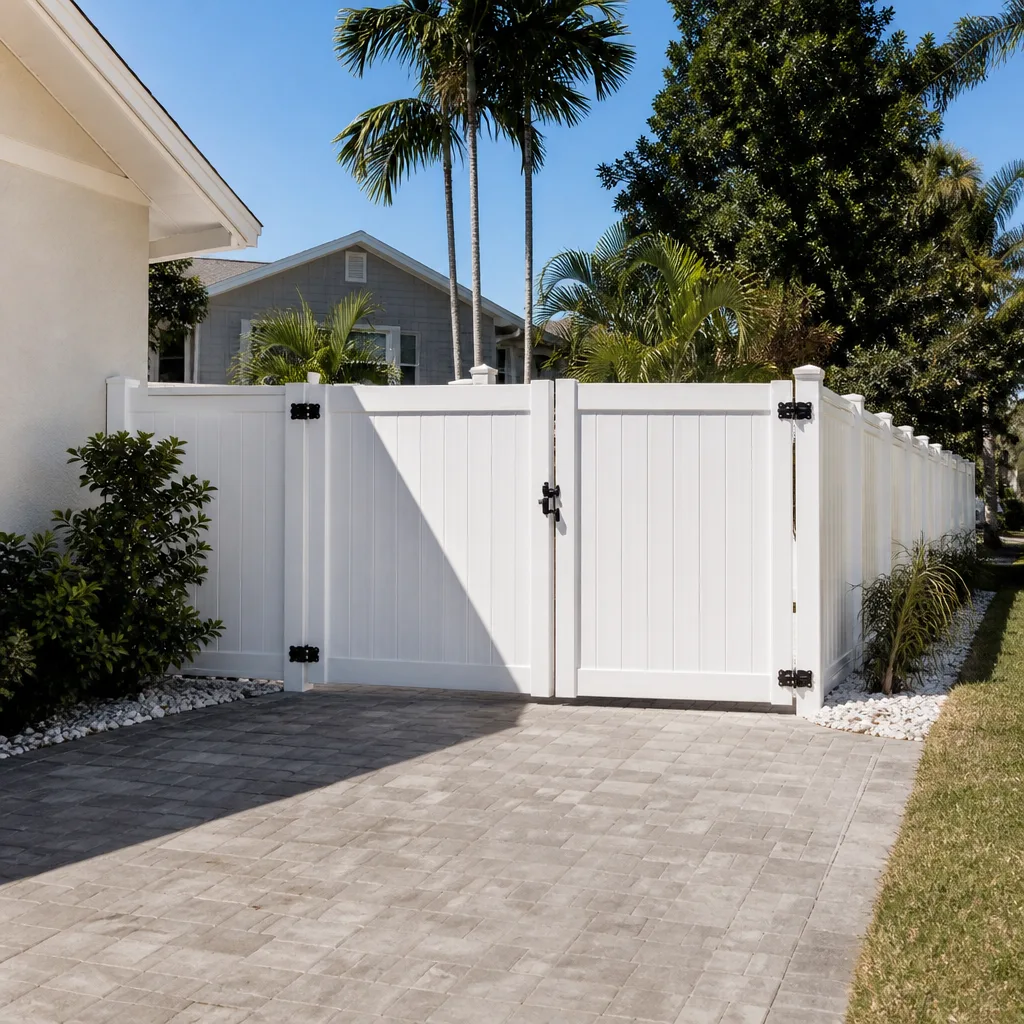
Installation itself is one to three working days for most residential fences in Torrance: a 150-foot wood fence takes one day, a vinyl run about a day and a half, and a block wall two to four days. From signed contract to final inspection, plan on two to four weeks to account for permit review, the 811 locate, material lead time, and post cure. Call (888) 349-6729 for an exact quote on your property, and the estimate is free.
Usually yes for fences over six feet, any front-yard fence, and fences in a historic overlay. Standard rear and side fences up to six feet are often permitted over the counter or online. The permit is a public record with the approved scope on it, so ask your contractor for the number before work starts. We pull the permits and pass the inspections as standard on every fence job.
California law requires you to call 811 and have underground utilities marked before digging, and the standard window is two working days, sometimes three in peak season. The marks also fade after a couple of weeks, so if your project stalls waiting on materials, you may need a second locate. We schedule the locate to follow material confirmation, so the marks are fresh on dig day.
No, and a crew that does it is cutting a corner. Post concrete needs 24 to 48 hours to set before panels, rails, or gates are attached, and the interior of the footing can stay soft even when the surface looks hard. Skipping the cure window is the most common cause of leaning fences in South Bay clay soil.
A wood privacy fence in Torrance typically runs $25 to $45 per linear foot installed, vinyl $35 to $60, chain-link $18 to $32, and block wall $50 to $90 depending on height and footing requirements. Permit fees, footing removal, and gate hardware can add $300 to $1,500. The written price is a flat number with a written scope, not a range, and changes require a signed change order. Call (888) 349-6729 for a free estimate.
Not without a signed change order. Under Clause 1 of the Haven Standard, no work proceeds on a change until the change order is signed, which is how projects stay within a few percent of the agreed price. If a buried footing or a locate conflict shows up, you get the number in writing before anyone picks up a tool. That is the standard across our trades, from Home Additions & ADU in Torrance work down to a 40-foot fence replacement.
The Bottom Line
The fence installation itself is rarely the part that runs late. The days disappear in the two weeks before the first post goes in: the permit, the 811 locate, the material lead time, the cure window, and the inspection. Read any contractor’s schedule by noting which of those five phases has a named date and which one is a shrug. A 150-foot wood fence is a one-day install sitting behind a two-week front end, and the contractor who tells you the second number is the one whose finish date you can trust. If a schedule does not hold, the 365-Day Done Right Promise applies, backed by The Haven Standard rather than a handshake.
Every fence project Rowan Construction Group Torrance quotes comes with a flat written price, a written scope, and a photo record from every visit, included as standard. Bring a competitor’s written estimate and we will review it line by line at no charge under our Free Second Opinion offer. Call (888) 349-6729 to schedule your free estimate.
Written by the team at Rowan Construction Group Torrance.