Last updated November 17, 2026







Free written scope consultation - allowances, timeline, and change-order rules on paper before a single trade is scheduled
Bathroom Remodeling Warning Signs Every Homeowner Should Know
A single soft tile near the base of a shower, not cracked, just slightly springy underfoot, is frequently the visible tip of a subfloor rot zone covering four to eight square feet of structural damage underneath. That is the part most homeowners miss. The mold stain on the ceiling gets attention because it’s ugly. The spongy tile gets ignored because it looks fine. In our experience across Torrance bathrooms from Old Torrance bungalows to 1980s Walteria tract homes, the expensive failures almost always start as small, quiet surface clues that pointed to active water intrusion months before anyone noticed. This guide shows you which clues are cosmetic and which are demolition.
Quick Answer
Bathroom remodeling warning signs fall into two groups: cosmetic conditions you can clean or patch, and structural evidence of active water intrusion that requires opening the wall. The tells are specific. A soft or springy tile, a hollow knock over a wide patch, grout that darkens only at the bottom of a shower wall, white mineral bloom on grout lines, or an exhaust fan that moves under 50 cubic feet per minute all point to moisture where it doesn’t belong. If two or more of these appear together, have a contractor look before you spend money on finishes.
Styles & brands we work with
- Kitchen remodeling
- Bathroom remodeling
- Home additions & ADU
- Roofing
- Windows & doors
- Driveway & pavers
- Fence
Table of Contents
- The Flex Test: Finding Delaminated Tile Without Demo
- Grout Color Change vs. Grout Failure
- Why Your Exhaust Fan Is a Leading Indicator
- What Efflorescence Tells You About Water Movement
- Cosmetic Cover-Up vs. Structural Repair
- Torrance-Specific Conditions That Accelerate Damage
- Common Mistakes to Avoid
- Frequently Asked Questions
The Flex Test: Finding Delaminated Tile Without Demo
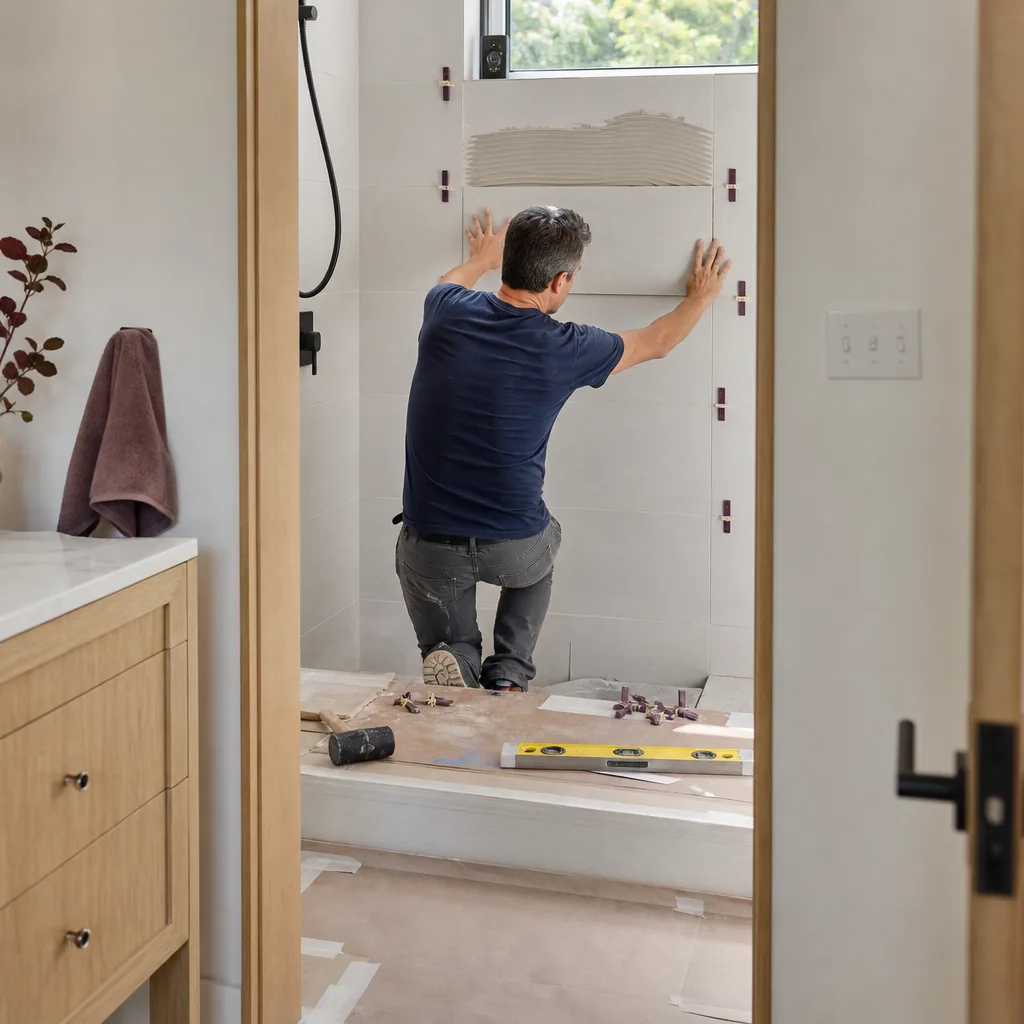
Delaminated tile means the tile has separated from the thin-set mortar holding it to the substrate. You can find this without a hammer and without a contractor, and it takes about ten minutes. Walk the shower floor and any wall tile within a foot of the floor, pressing your weight through the ball of your foot on horizontal surfaces and pushing with your palm on vertical ones. A properly bedded tile does not move. A delaminated one deflects slightly, the way a floorboard with a loose nail flexes under weight. Some make a faint click when you step off. That movement is your signal.
For walls, use your knuckles. Tap a grid pattern, one knock every six to eight inches, and listen for the change. Solidly bonded tile over backer board produces a tight, consistent report. A hollow or dead sound means air where mortar should be. Now the structural part, and this is where the interpretation matters:
- One hollow spot near a drain or valve escutcheon: usually a localized bedding failure. Common, fixable, watch it.
- A hollow patch larger than two tiles wide: the substrate is probably saturated. Water has been sitting behind the tile long enough to break the bond.
- A hollow sound across an entire shower wall, floor-to-ceiling: the waterproofing layer, the membrane behind the tile, has failed or was never correctly installed. This is not a re-grout job.
Here’s the part most guides skip. Delamination almost never happens from foot traffic alone. It happens when moisture gets behind the tile, swells or degrades the substrate, and shears the bond. So a hollow knock is not the problem. It’s the symptom of a problem you can’t see: a failed membrane, a missing vapor barrier, or a shower pan that was never sloped correctly. If you’re seeing this and want to understand what a correct rebuild looks like, our Rowan Construction Group Torrance home page lays out how we scope a bathroom project from the studs out.
Grout Color Change vs. Grout Failure
Grout darkening and grout failure look similar and mean completely different things. Getting this distinction right saves homeowners thousands, because the first is a maintenance issue and the second is evidence of a waterproofing breach.
Grout color change shows up as a uniform, gradual shift across a large area, usually from white or light gray toward a duller tone. It’s caused by surface dirt, soap scum, hard water minerals, or sealer breaking down with age. It cleans up with an acid-based grout cleaner and a stiff brush, and it holds a fresh coat of sealer afterward. No water is getting behind the tile. This is cosmetic.
Grout failure has a different signature, and it’s rarely uniform:
- Darkness concentrated at the bottom of a wall or around a drain or valve: water is wicking up or pooling where the drainage or sealing has given out. This is a membrane problem until proven otherwise.
- Cracking or crumbling, especially along a horizontal seam where the wall meets the floor: movement, settling, or a missing flexible joint – and on a shower floor, a direct channel for water to reach the subfloor.
- Soft grout you can scratch with a fingernail, or pinholes and pits: the cement has degraded. Often the first thing you see when a shower pan has been leaking for a while.
In Torrance, the coastal humidity between May and September accelerates the difference. A well-sealed shower dries between uses. A shower with a hidden leak never fully dries, and that constant moisture does more consistent damage than an occasional spill ever could. Grout that darkens even when you clean it, then stays dark, is water coming from behind. If you’re also seeing loose fittings and worn surfaces elsewhere, that’s worth reading alongside our guide to bathroom remodeling in Torrance, which covers when a refresh becomes a rebuild.
Why Your Exhaust Fan Is a Leading Indicator
An undersized or failing bathroom exhaust fan is the most under-diagnosed contributor to bathroom moisture problems, and it’s also the cheapest thing on this list to test. The standard for a bathroom exhaust fan is 1 CFM (cubic foot per minute) per square foot of floor area, with a minimum of 50 CFM for most bathrooms. A 5-by-9 bathroom, 45 square feet, should run at least 50 CFM. A fan rated at 50 CFM but installed five years ago, with a dust-clogged wheel and a sagging flex duct, may be moving 20 to 30 CFM on its best day. The sticker on the grille means nothing. The actual airflow is what counts.
The field test takes one minute. Cut a square of toilet paper roughly six inches across, hold it flat against the fan grille with the fan running, and let go. A healthy fan pulls it tight to the grille and holds it. A weak fan drops it, or the paper sags and flutters. If the paper falls, your fan is not doing its job.
Why this matters in Torrance specifically. Our marine layer keeps outdoor humidity high through the late spring and much of the summer, so a bathroom that would dry out in an inland climate stays damp inside longer. Fans that pull under 50 CFM let that moisture settle on walls, inside cabinets, and behind the tile where it feeds mold and degrades the substrate. You’ll often see the evidence before you see the mold: peeling paint on the ceiling above the shower, a musty smell that never leaves, condensation on the mirror that takes more than a few minutes to clear after a shower ends. A fan ducted into the attic instead of routed to the exterior is worse – it dumps that moisture into your attic. If your roof or attic is already showing damp-related issues, our roofing services in Torrance guide walks through what to check first.
What Efflorescence Tells You About Water Movement
Efflorescence is the white, powdery mineral deposit that appears on grout, tile, or the base of a bathroom wall. It looks like a salt stain, and it is. Water dissolves mineral salts out of concrete, mortar, or masonry as it moves through, then deposits them on the surface as the water evaporates. That deposit is a delivery receipt for water, and the location of the receipt tells you where the water is coming from.
Efflorescence on the floor grout near a shower means moisture is moving up through the slab or the pan, evaporating at the surface, and leaving minerals behind. On a wall at the base of a shower enclosure, it means water is coming through the wall cavity from the shower side or from outside. On the face of tile under a window or on an exterior wall, it can mean water is entering from the roof, a window frame, or the siding above. The mineral stain is not decorative. It is a map of the leak.
Here’s what separates efflorescence from a white cleaning product residue: efflorescence dissolves when you wipe it with a damp cloth, then returns in the same spot within days or weeks. Cleaning products stay gone. If it keeps coming back, water is still moving. Left alone, efflorescence is usually harmless to the tile, but the wet cycle behind it is what causes rot, spalling, and mold. In Torrance, homes near the older drainage in central neighborhoods often show efflorescence at slab edges where the bath sits against a garage wall, and that’s frequently a sign of a slab or waterproofing issue, not a surface stain.
Cosmetic Cover-Up vs. Structural Repair
When you walk a house you’re buying, or re-examining your own bathroom after a past repair, the question is whether someone fixed the water problem or hid it. A contractor who repaired the cause and a contractor who painted over the symptom can leave bathroom tile that looks nearly identical at thumbnail size. These are the specific tells, in order of reliability:
- The repair is isolated and rectangular. A patch of two or three new tiles in an otherwise-aged shower wall, with a slightly different grout color or gloss, is usually a patch. A full wall or full shower re-tile is usually a fix. Patches are fine when the cause was addressed. The concern is a patch with no corresponding repair visible behind or below it.
- Fresh caulk over old grout. Running a heavy bead of silicone caulk along a shower floor without removing the failed grout underneath traps water in the joint. It looks neat for a year, then it doesn’t. Probe gently at the edges.
- New drywall or a patched ceiling below a bathroom. If the bathroom sits over a garage or a lower level with fresh paint or new drywall, ask why. Water damage above is the usual reason.
- Mismatched sealing around the drain, valve, and floor-to-wall seam. Look at the details. A structurally correct repair re-flashes and reseals every penetration. A cosmetic one usually misses the drain flange.
- No documentation. This is the biggest one. Ask for the invoice, photos, and what was found. A repair with no paper trail is an unknown. At Rowan Construction Group, every visit includes a documented photo record as a standard deliverable, not an upgrade, precisely so this question has an answer.
If you’re in the middle of a purchase and need an independent read, the written estimate on our Driveway & Pavers service in Torrance page shows the format we use: a flat price, a written scope, and the specific conditions named. That same format is what we hand a buyer for a bathroom.
Torrance-Specific Conditions That Accelerate Damage
Not every bathroom warning sign is climate-neutral. In Torrance, three local conditions show up again and again in our scoping visits, and they change how you should read the clues above.
Coastal humidity and the marine layer. Torrance sits close enough to the coast that our late spring and summer humidity stays elevated for months. Bathrooms without adequate ventilation hold moisture, and grout and caulk age faster than they would inland. A bathroom that never fully dries is a slow-motion leak, and the fan and grout clues in this guide matter more here than they would 20 miles east.
Older plumbing and galvanized supply lines. Many Torrance homes built before 1970 still have aging supply and drain components. Slow valve leaks and drain connections behind the wall don’t always show as a puddle – they show as efflorescence at the base of a wall and grout that darkens from the bottom up. If your home is in that era, those two clues deserve a professional look sooner.
Ceiling and wall assemblies over garages and additions. Torrance has a lot of homes with bathrooms over garages or in later additions where the waterproofing was done piecemeal. That’s where we most often find a cosmetic patch over a live leak. The video scoping and photo documentation we include on every visit exist to catch this before a remodel finds it the hard way. If your house has an addition, our Home Additions & ADU service in Torrance page covers what a proper retrofit looks like.
Common Mistakes to Avoid
- Caulking over failed grout. Running a bead of silicone along a shower pan without clearing the failed grout traps water in the joint, and the mold comes back within a season.
- Replacing the tile without fixing the membrane. New tile over a failed waterproofing layer looks great for a year and fails underneath, and in our experience that’s the most expensive mistake on this list because it’s a full redo.
- Ignoring a fan that doesn’t hold the paper test. A 50 CFM requirement sounds technical, but a $150 fan swap on a weak unit is the cheapest mold correction available. Don’t skip it.
- Assuming fresh paint means a fixed leak. Fresh ceiling paint over a bathroom is often a cover, especially in the first year after a sale. Look for a corresponding repair in the bathroom above.
- Patching a patch. A three-tile fix in a shower that’s already failed once rarely solves anything. If the same wall is patched twice, the substrate is the problem.
- Buying a house without asking for the repair record. Ask for invoices and photos on any bathroom that sold within the last three years. No paper trail, no proof.
- Waiting until it’s a mold problem. Delamination, efflorescence, and dark grout are all early warnings. The demolition bill roughly doubles once mold remediation is involved, and drying out a moisture problem early is a fraction of a rebuild.
See the difference
 Before
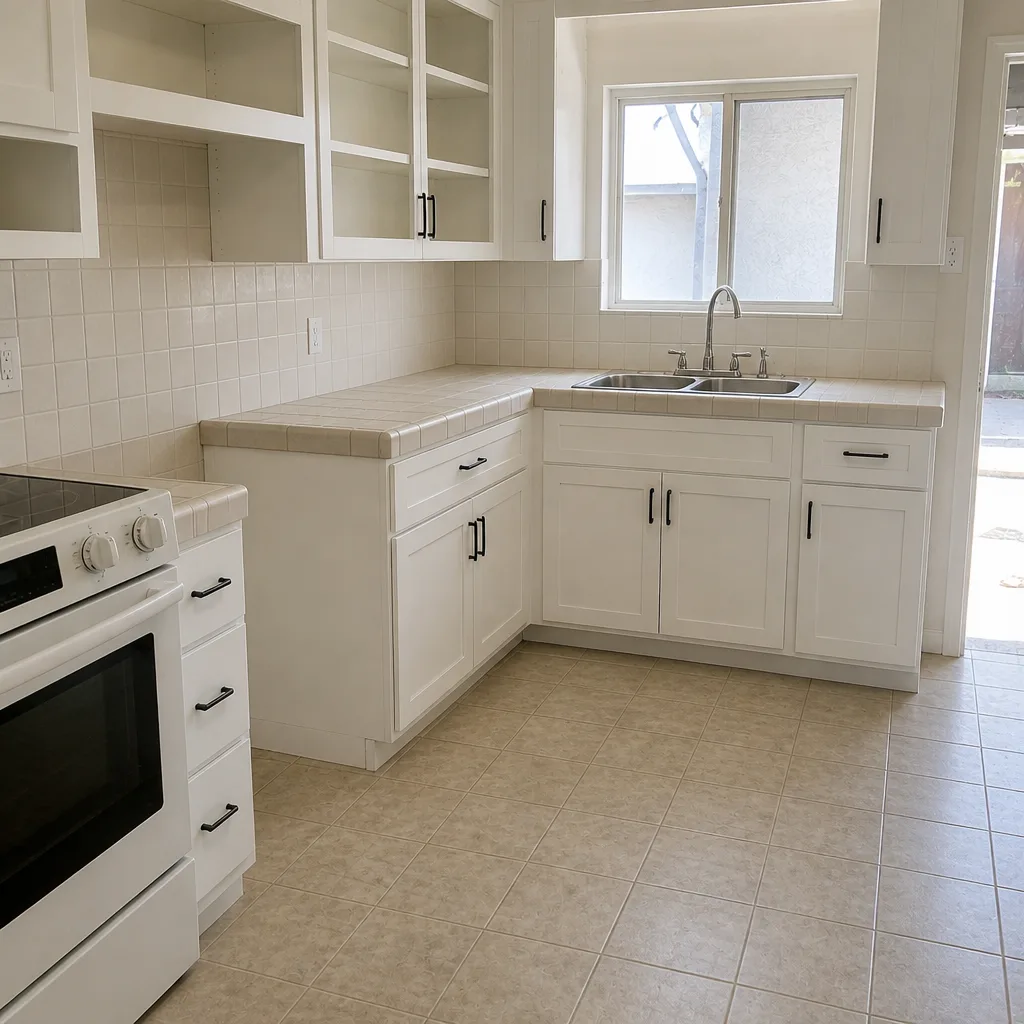 After
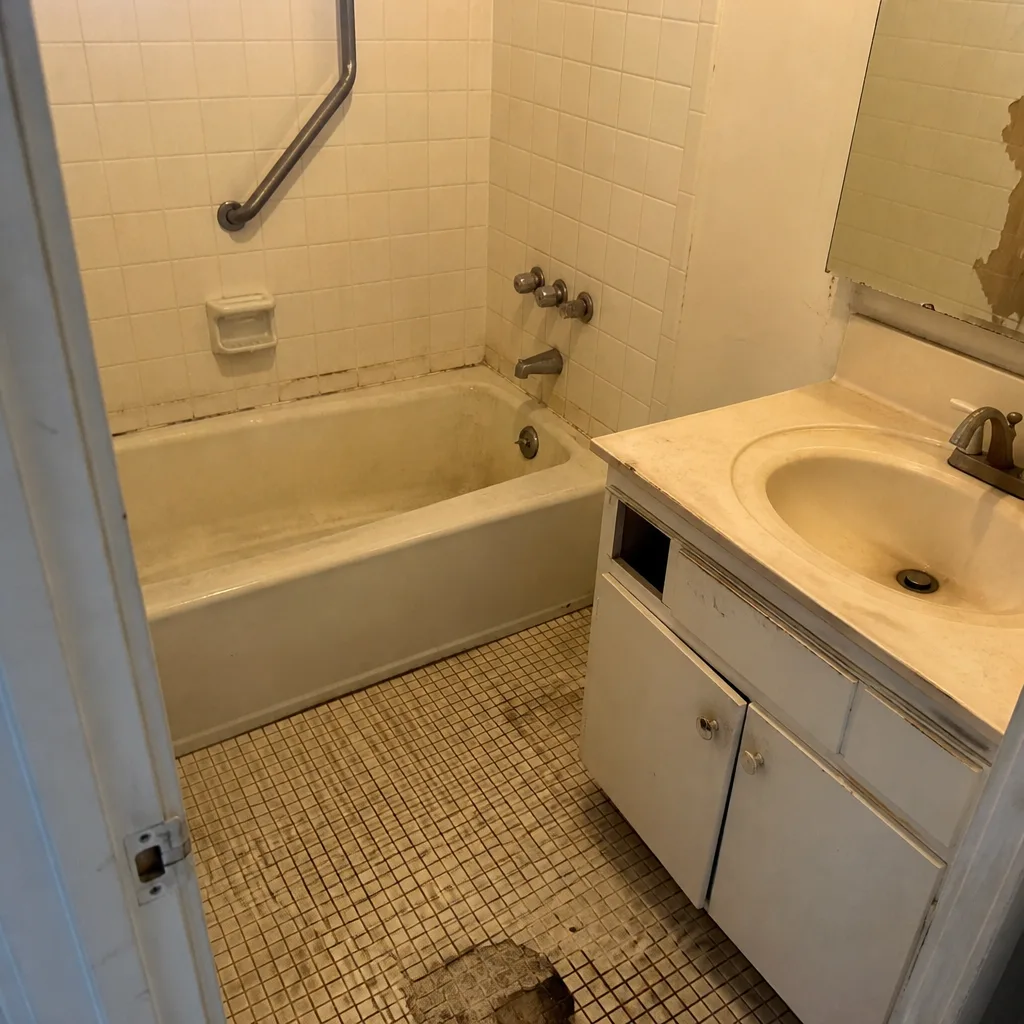 Before
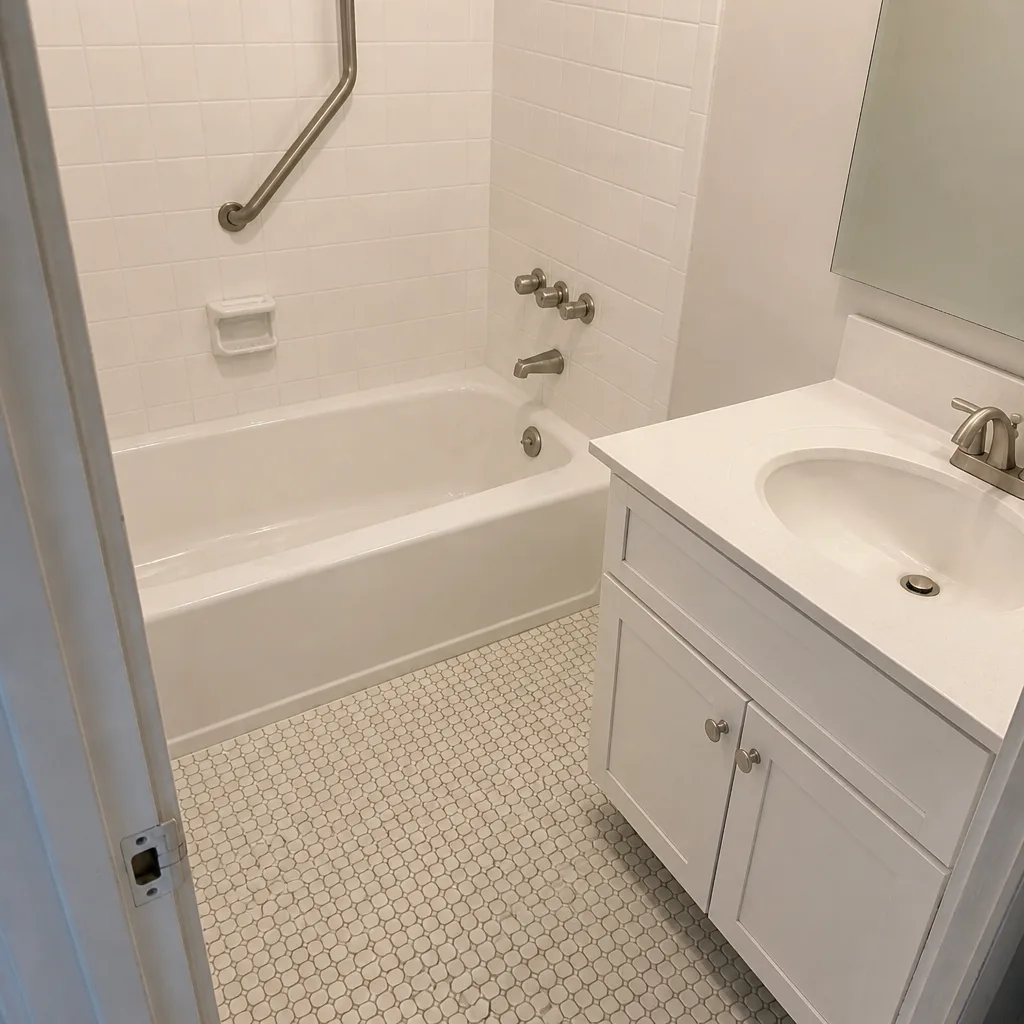 After
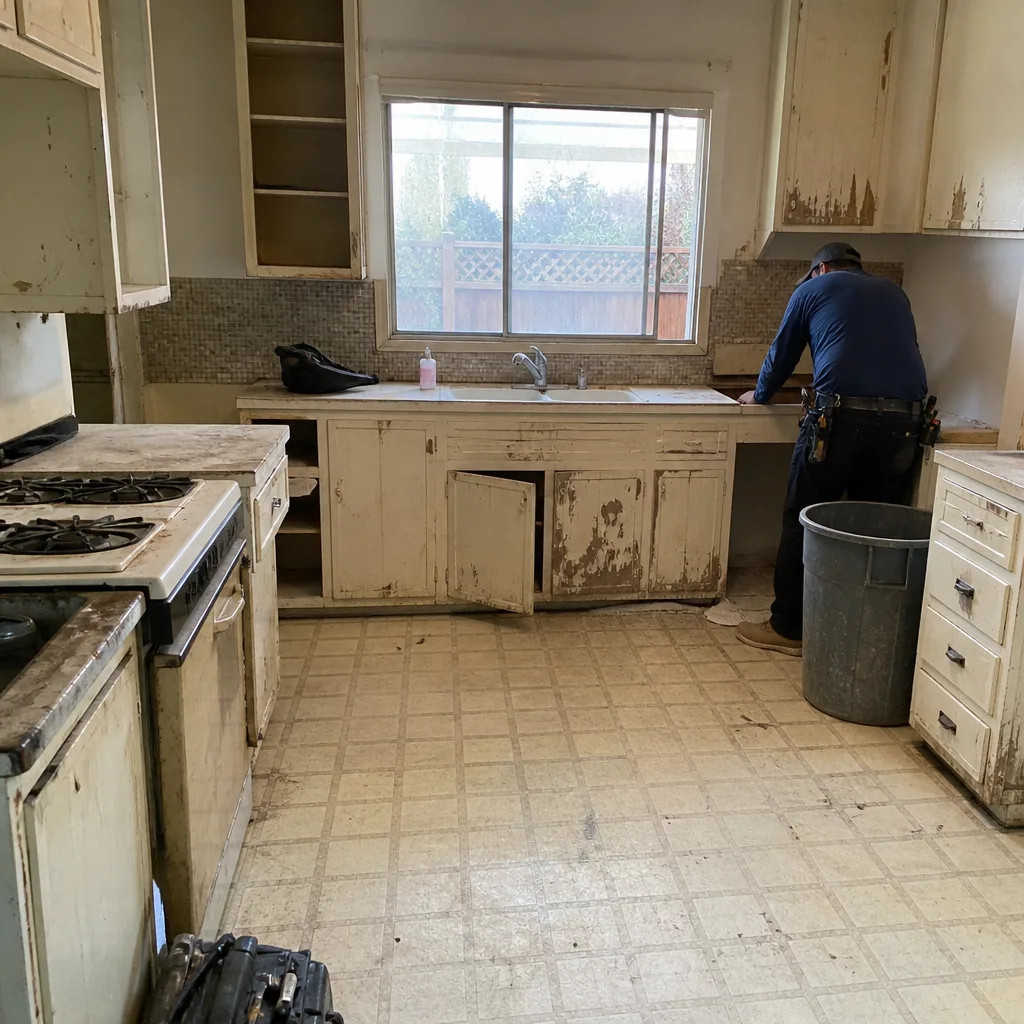 Before
 After
When to Call a Professional
Call a professional when you find two or more of these clues together, when any hollow knock spans more than two tiles, when efflorescence keeps returning after cleaning, or when you’re buying a home with a recently patched bathroom and no repair record. Those aren’t judgment calls. They’re evidence of active water intrusion that needs a scoped diagnosis before finishes get picked. A bathroom remodel is a five-figure decision, and the second opinion is free. Rowan Construction Group Torrance offers free estimates in Torrance – call (888) 349-6729 to schedule yours. Our technicians have up to 19 years of experience, and every visit includes a documented photo record of what we found so you have it in writing before you decide anything.
Frequently Asked Questions
Use the flex test: press through the ball of your foot on floor tile and push with your palm on walls, then knock a grid pattern every six to eight inches to listen for hollow reports. Soft, springy tile and wide hollow patches both point to moisture behind the tile. If you find either, call (888) 349-6729 for a free estimate and a documented read on what’s actually happening.
Dirty grout changes color gradually and evenly across a large area and cleans up with an acid-based cleaner. Failing grout darkens in a specific spot – usually the bottom of a wall, around a drain, or along a floor seam – and stays dark after cleaning. Failing grout means water is coming from behind, and that’s worth a free estimate.
Do the toilet paper test: hold a square flat against the fan grille with the fan running, then let go. A working fan pulls it tight and holds it; a weak fan drops it. A bathroom under 50 CFM in Torrance’s humid months is contributing to mold conditions. Call (888) 349-6729 for a free estimate if the paper falls.
Efflorescence – mineral deposits left behind as water moves through the masonry and evaporates on the surface. If it wipes off and returns in the same spot within weeks, water is still moving through the wall or slab. That’s a diagnosis-and-quote situation, and estimates are free – call (888) 349-6729.
Yes, if the flex test and knock test come back clean and the grout is only dirty. No, if any tile sounds hollow across a wide area – fresh grout over a failed substrate fails within a year and wastes the money. Call (888) 349-6729 for a free estimate and we’ll tell you which one you’re looking at.
Not without a signed change order. Under Clause 1 of The Haven Standard, Rowan Construction Group delivers a written price before any work starts, and no change proceeds until you’ve signed – the discipline that has kept our projects within a few percent of the agreed cost across 4,000-plus jobs. Call (888) 349-6729 to schedule your free estimate.
The Bottom Line
Bathroom problems announce themselves six to eighteen months before they get expensive. The soft tile, the hollow knock, the grout that stays dark, the paper that falls at the fan, and the white bloom that keeps coming back are all early warnings – and each one is cheap to investigate and expensive to ignore. If you’re in Torrance, the coastal humidity makes every one of these signals more urgent. Trust the documentation, not the fresh paint. Call Rowan Construction Group Torrance at (888) 349-6729 for a free estimate, and get the number in writing before anyone picks up a tool.
Written by the team at Rowan Construction Group Torrance.