Last updated November 17, 2026

Free written scope consultation - allowances, timeline, and change-order rules on paper before a single trade is scheduled
Construction Permits, Codes & Inspections in CA: What You Need to Know
An unpermitted addition in California doesn’t just risk a stop-work order. It can void a homeowner’s insurance policy on the entire structure and trigger a mandatory disclosure at resale that trims the asking price, all from one decision to skip the permit to save a few hundred dollars. California’s system is layered: the state sets the floor, but cities like Torrance amend it, and those local amendments are where most surprises hide. This guide walks the whole stack, from Title 24 energy rules to the Torrance inspection sequence, so you know what a legal, insurable project actually requires.
Quick Answer
In California, most additions, structural changes, and system replacements require a building permit that confirms the work meets the California Building Code and the current Title 24 energy code, and the permit must be inspected at set stages before it’s signed off. The state code sets minimum standards, but a city like Torrance adopts its own amendments and fee schedule on top of it, so the rules you actually answer to are local. Get the permit, pass the inspections, and keep the paper trail.
Styles & brands we work with
- Kitchen remodeling
- Bathroom remodeling
- Home additions & ADU
- Roofing
- Windows & doors
- Driveway & pavers
- Fence
Table of Contents
- How California’s permit system is layered, state to local
- How Title 24 energy rules trigger on remodels
- Where Torrance amends the state code
- The inspection sequence for a permitted addition
- What a failed inspection actually costs
- How to pull a property’s permit history
- What as-built permit legalization costs in Torrance
- The documentation trail that keeps a project legal
How California’s permit system is layered, state to local
Think of California’s building rules as three stacked layers. At the base is the state code: the California Building Code, the Residential Code, the Electrical, Plumbing, and Mechanical codes, and Title 24 for energy. Those set the minimum every jurisdiction must enforce. The middle layer is the local jurisdiction, which adopts the state code with its own amendments, adds a fee schedule, and runs the permit counter and inspections. The top layer is the specific project: what you’re building, where on the lot, and how it connects to existing systems.
Most homeowners we talk to in Torrance only ever see that middle and top layer, and that’s exactly where the confusion lives. Two neighboring cities can read the same state code and still handle a room addition differently because one has adopted a stricter local amendment. A plan that sailed through in one jurisdiction may come back with corrections in another.
The practical result is that any sentence beginning “In California, you can just…” is usually wrong. The useful question is narrower: what does the city with jurisdiction over this address require, in the code cycle it has actually adopted? Answering that starts with the local building department, not a guess based on a neighboring city’s practice. For homeowners planning a larger scope, our guide to home additions and ADUs in Torrance walks through how the local rules apply to those projects specifically.
How Title 24 energy rules trigger on remodels
Title 24 is California’s energy code, and it’s the part of the permit process most likely to catch a homeowner off guard, because it applies to work that has nothing to do with energy at first glance. A cosmetic refresh usually doesn’t engage it. Cross certain thresholds and the whole project suddenly needs a compliance calculation.
The triggers to understand:
- Adding conditioned square footage. Enclosing a porch, bumping out a wall, or converting a garage to living space brings new conditioned area into the energy model, which forces a full Title 24 compliance run on the affected envelope.
- Replacing a system. A new furnace, air conditioner, or water heater generally triggers Title 24 requirements for that equipment, and often for related duct or envelope work.
- Window and door replacement. When you replace a significant share of glazing, the new units have to meet U-factor and solar heat gain requirements, documented on the permit.
- Reroofing with a change in assembly. A straight overlay may not trigger it, but adding insulation or changing the roof assembly can pull Title 24 into the scope.
The compliance calculation itself is a software run performed by a qualified energy consultant, and it produces documentation the building department reviews alongside your plans. Skip it and the permit stalls. Our Rowan Construction Group Torrance home page lays out how we sequence that documentation before a single tool comes out.
Where Torrance amends the state code
Torrance adopts the California code with local amendments, and those amendments are the reason a plan reviewer in Torrance may ask for something a contractor from another city didn’t anticipate. The amendments cover everything from seismic detailing to setback and grading requirements, and they’re published in the city’s municipal code alongside the adopted building standards.
Where to find the current rules: the City of Torrance’s official website hosts its building and safety division, the adopted code editions, the fee schedule, and any local ordinance changes. That’s the only reliable source, because a code cycle update can change a requirement overnight and a contractor working from memory will miss it. When you pull a permit, ask which code cycle the city is currently enforcing; the answer affects what your plans have to show.
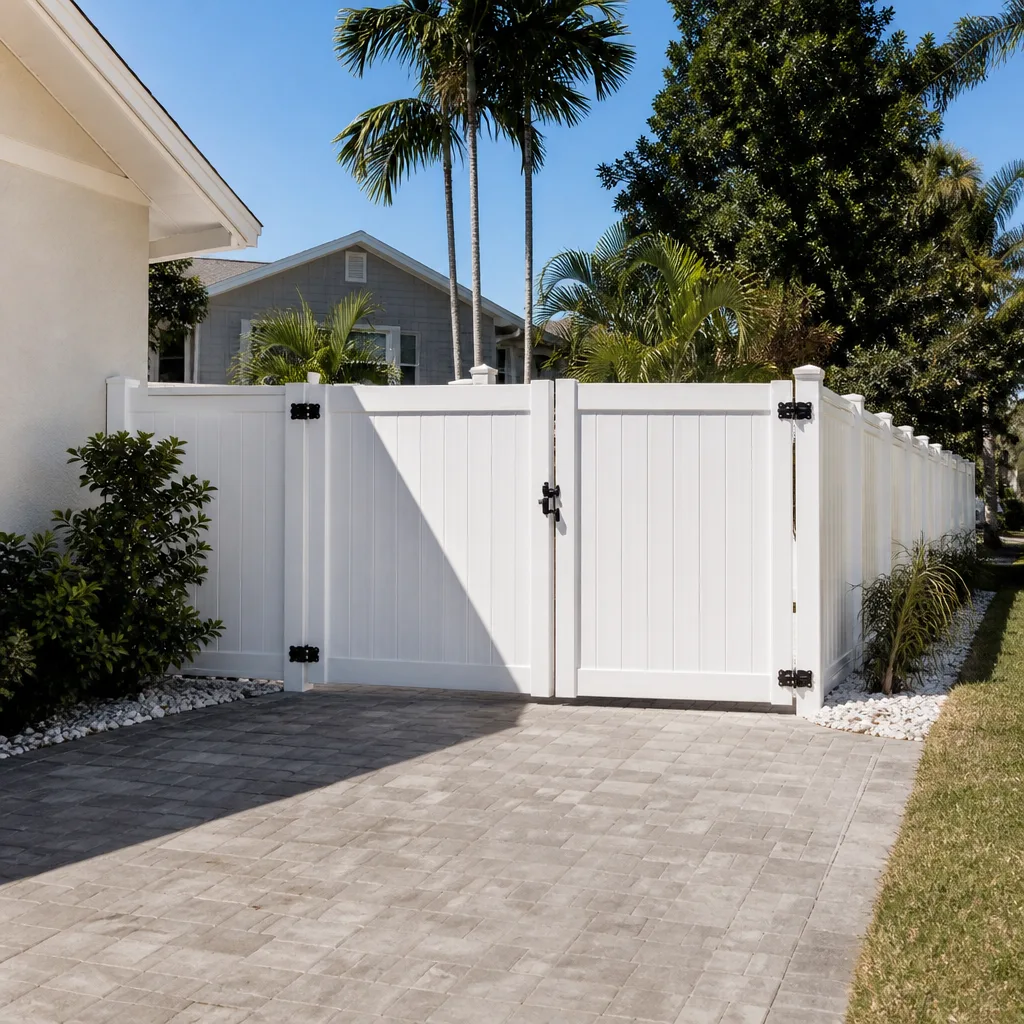
We’ve seen the difference a local amendment makes on something as routine as a fence. The state has a default height and setback framework, but Torrance enforces its own limits on height, materials, and placement near a property line, plus the pool safety rules that kick in around a pool fence. Our fence installation in Torrance guide covers those specifics, and it’s a good example of why “the state says it’s fine” is never the end of the conversation. The habit to build is simple: pull the current local ordinance before you design, not after.
The inspection sequence for a permitted addition
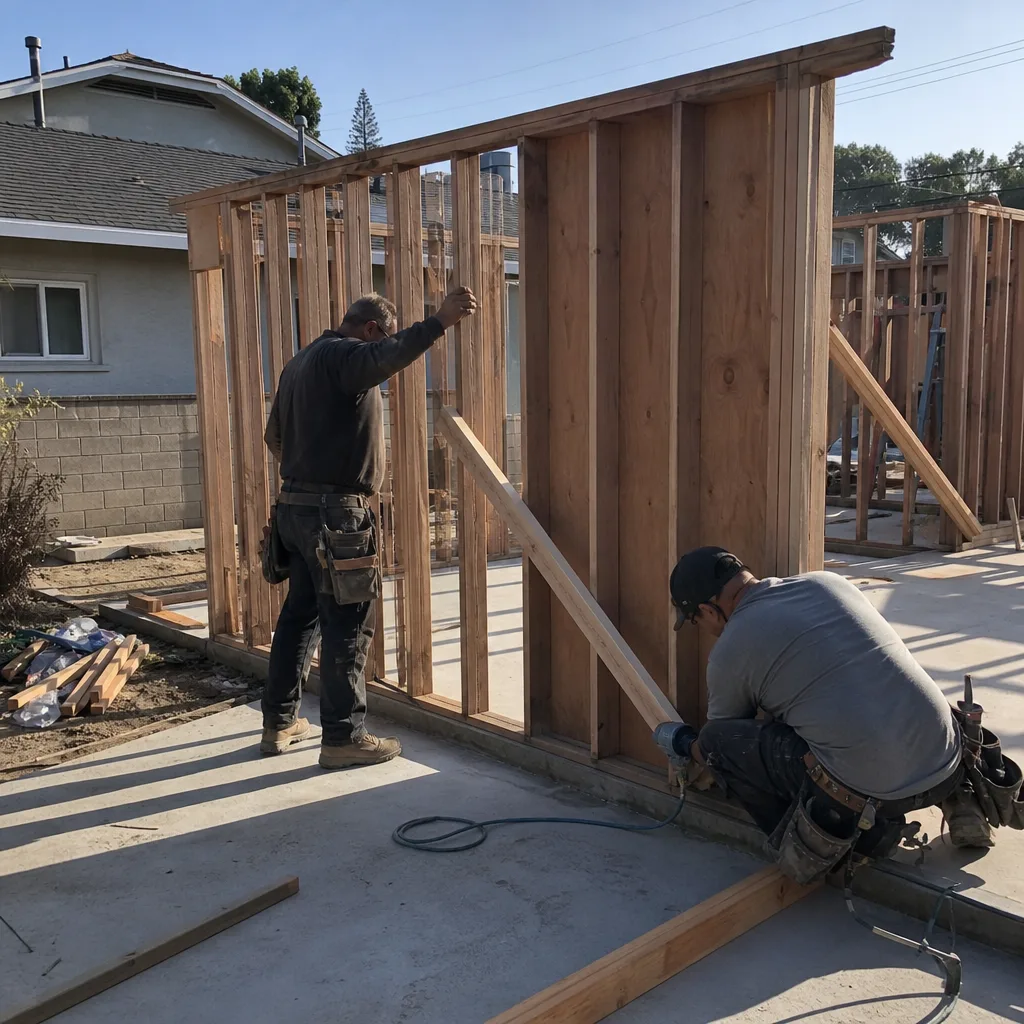
Every permitted addition in Torrance moves through a set inspection sequence, and each stage has to pass before the next one is covered up. This is the part homeowners underestimate, because it governs schedule as much as any trade does.
- Foundation inspection. After excavation and formwork but before the pour, an inspector checks footing depth, reinforcement, anchor bolts, and any under-slab plumbing or electrical.
- Framing inspection. Once the walls and roof structure are up and sheathed, the inspector checks the structural framing, shear detailing, and the connections, before anything is closed in.
- Rough MEP inspection. Rough mechanical, electrical, and plumbing go in next and get inspected in the open walls: the wiring runs, the drain and supply lines, the ductwork, and the gas line.
- Insulation inspection. With the envelope sealed and the Title 24 assembly in place, the inspector confirms the insulation values match the compliance documentation.
- Final inspection. After finishes, fixtures, and final connections, the inspector signs off the whole permit and the project is legal and insurable.
Each stage is a gate. Build past one without the sign-off and the inspector can require the work be opened up again. If a project involves a driveway or hardscape alongside the addition, our driveway and pavers in Torrance page explains where those scopes touch the permit process.
What a failed inspection actually costs
A failed inspection is not a disaster, but it does carry real cost, and it’s worth being honest about that upfront. When an inspector hands back a correction, the project stops until the issue is fixed and re-inspected. That means a re-inspection fee from the city, and it means schedule: crews get rescheduled, materials sit, and the next trade waits.
The dollar cost is usually modest per correction, but the schedule cost compounds. A framing failure late in the sequence can push back the rough MEP and insulation inspections that depend on it, and a finish crew booked weeks out may not be able to return on short notice. On a permitted addition, a single two-week stall can cost more in labor and carrying costs than the permit itself.
The failures we see most often in Torrance are avoidable: anchor bolts in the wrong position at the foundation stage, shear detailing that doesn’t match the plans, and insulation that doesn’t line up with the Title 24 documentation. Each one traces back to a documentation gap, not a craftsmanship problem. That’s why a written scope and a plan that matches what’s actually built matters more than speed.
How to pull a property’s permit history
Before you buy or remodel a Torrance property, pull its permit history. The record shows what work was permitted, who did it, whether it was inspected, and whether it was ever signed off, and it will surface unpermitted work that a seller may not disclose.
The process through Torrance Building & Safety:
- Identify the property by address and parcel number. The assessor’s parcel number makes the records search precise.
- Submit a records request. The city’s building division handles permit records requests, and some jurisdictions post an online portal you can search without filing anything.
- Ask for the permit card and inspection history. The permit card shows each stage and whether it passed, was signed off, or is still open.
- Check for open permits or code enforcement cases. An open permit from years ago can block a closing or a new permit until it’s resolved.
- Cross-check against what you can see. If the listing shows a converted garage or a finished basement and the permit history shows nothing, treat it as unpermitted until proven otherwise.
Do this before you make an offer, not after. A permit history that reveals unpermitted work changes your negotiating position and your budget.
What as-built permit legalization costs in Torrance
If a home already has unpermitted work, California gives you a path to make it legal, and it’s called as-built legalization. It means submitting what was actually built, as it stands, to the city for review, often with a structural risk assessment, and getting a permit issued after the fact.
The cost has two parts. The permit fees are set by the city’s fee schedule and are based on the valuation of the work being legalized, not the original construction cost, so they vary by scope. The larger variable is the risk assessment: an engineer reviews the as-built structure to confirm it’s safe and code-compliant for its current use, and if it isn’t, the fix can cost far more than any permit ever would have.
The structural risk assessment may require opening up walls to inspect framing, confirming load paths and connections, and documenting what’s found. As-built legalization is almost always more expensive and more disruptive than permitting the work the first time. It’s also sometimes the only way to make a property insurable and sellable. When we quote a legalization, the written price and written scope come before any work starts, and no change proceeds without a signed change order.
The documentation trail that keeps a project legal and insurable
The permit and inspection record is the single document that keeps a project insurable and saleable. Your carrier relies on it, and so does any buyer’s lender. A permit that closed with a final sign-off is proof the work meets code; a project with no paper trail is a question mark that someone has to price in.
What the trail should contain:
- The permit card with every stage signed off, and a final inspection.
- The approved plans, as reviewed, including any corrections the city required.
- The Title 24 compliance documentation, matching the assemblies actually installed.
- Signed change orders for anything that shifted during construction, so the scope matches the final build.
- The written warranty covering the workmanship, in plain terms.
This is the discipline that sits behind the 365-Day Done Right Promise: if it isn’t done right, we make it right, and the promise is printed on every page and backed by a terms page, not an asterisk. It’s also the reason we hand every customer a documented photo record on each visit, so there’s evidence of what was found and what was done. That habit carried over from the company’s founding in 2007, across more than 4,000 projects, every one with a written price before work started.
Common Mistakes to Avoid
- Assuming the permit is optional for “small” work. Converting a garage or enclosing a porch triggers Title 24 and a full permit in most Torrance cases, and skipping it creates an unpermitted condition that follows the property.
- Designing before pulling the current local code. A Torrance amendment to the state code can change a setback or a fence height, and designing to the state default wastes the plan-review cycle.
- Building past an inspection gate. Covering rough framing or plumbing before the inspector signs off means opening it back up, which costs both a re-inspection fee and schedule.
- Missing the Title 24 trigger. Replacing a furnace or a large share of the windows without the compliance documentation stalls the permit at review.
- Buying without a permit history. An open permit from a previous owner can block a new permit or a closing, and the city won’t tell you unless you ask.
- Letting scope shift without paper. A verbal “we’ll add that in” during construction is how projects blow their budget; every change needs a signed change order before work proceeds.
- Treating legalization as cheap. As-built legalization with a structural risk assessment almost always costs more than permitting correctly the first time.
See the difference
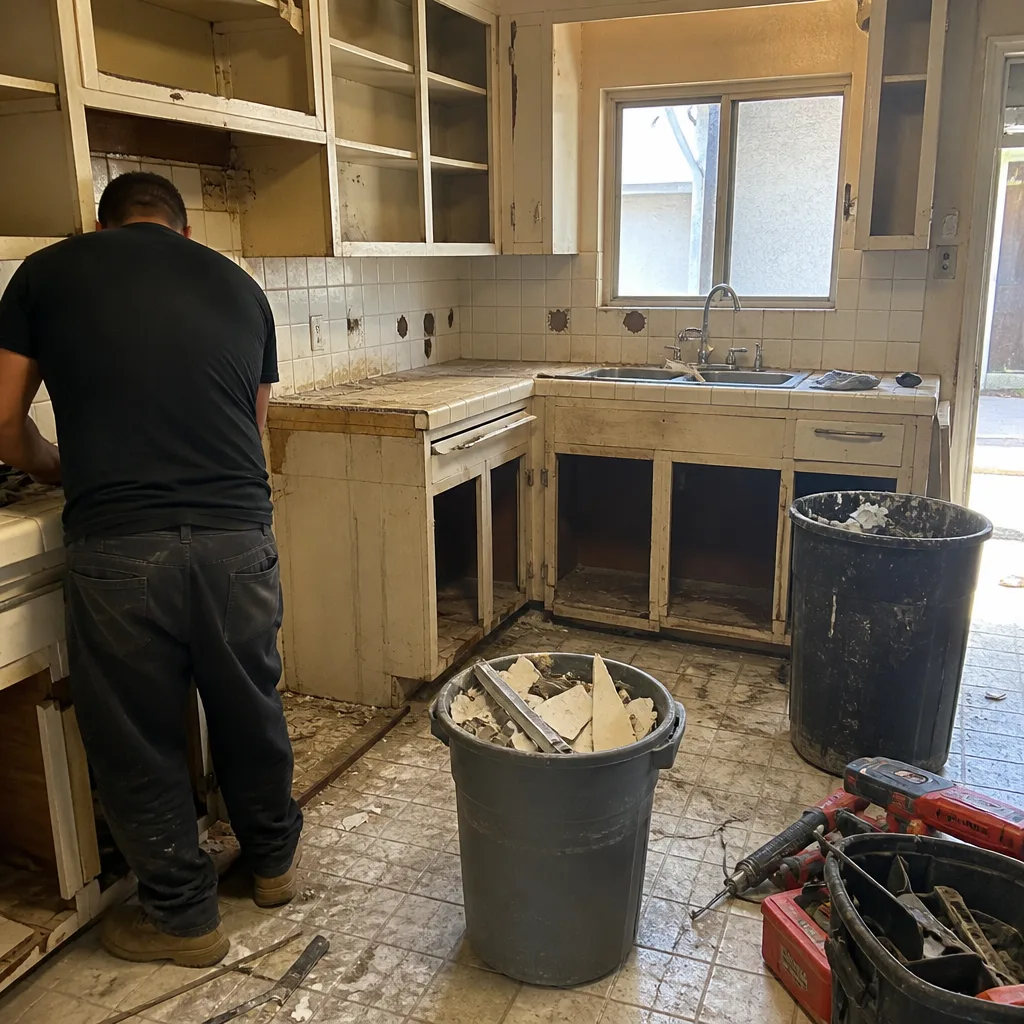 Before
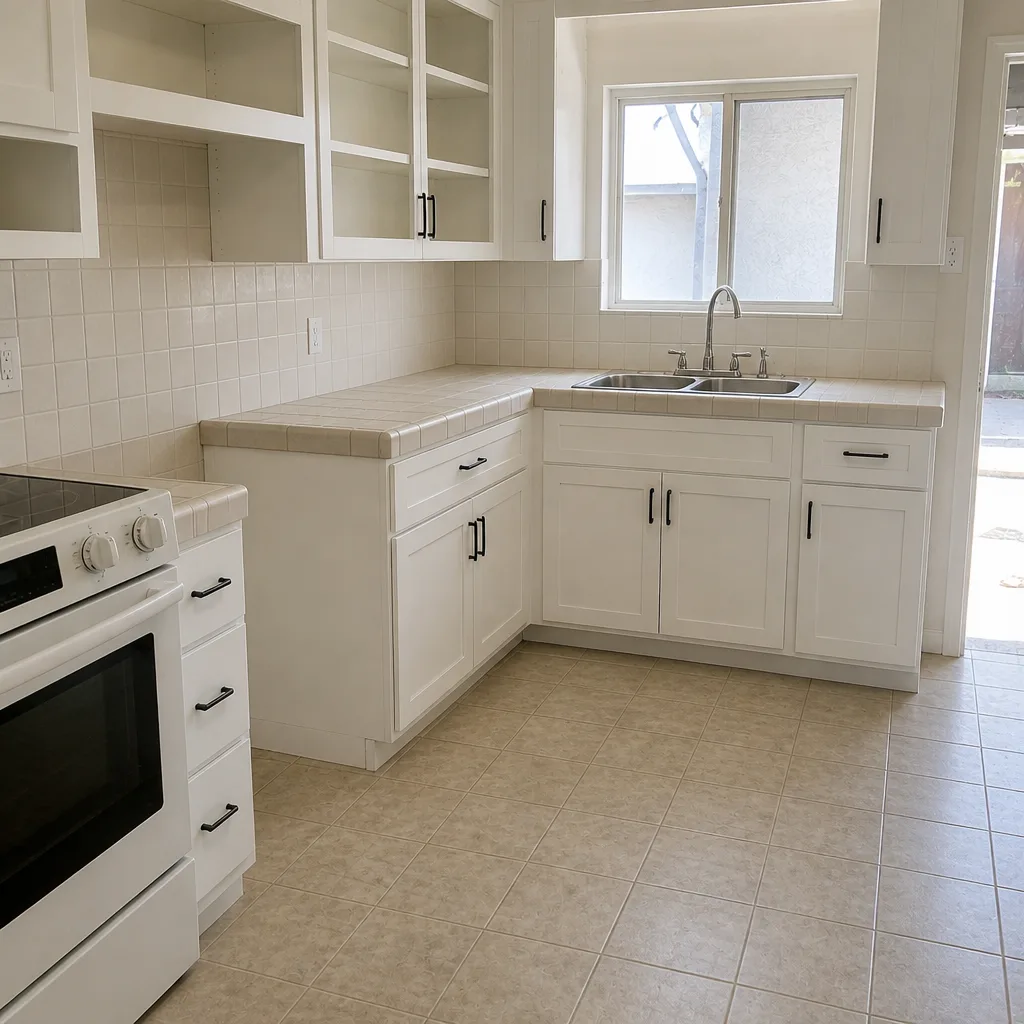 After
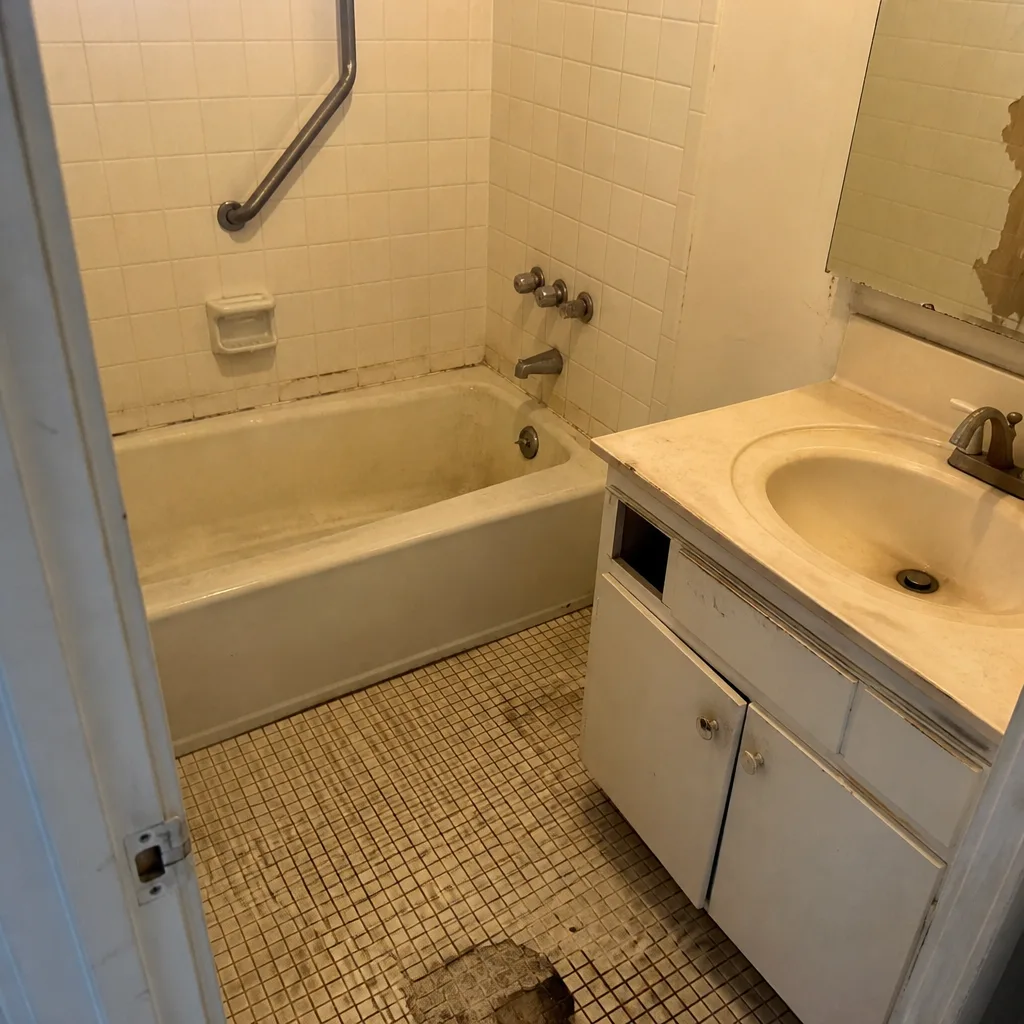 Before
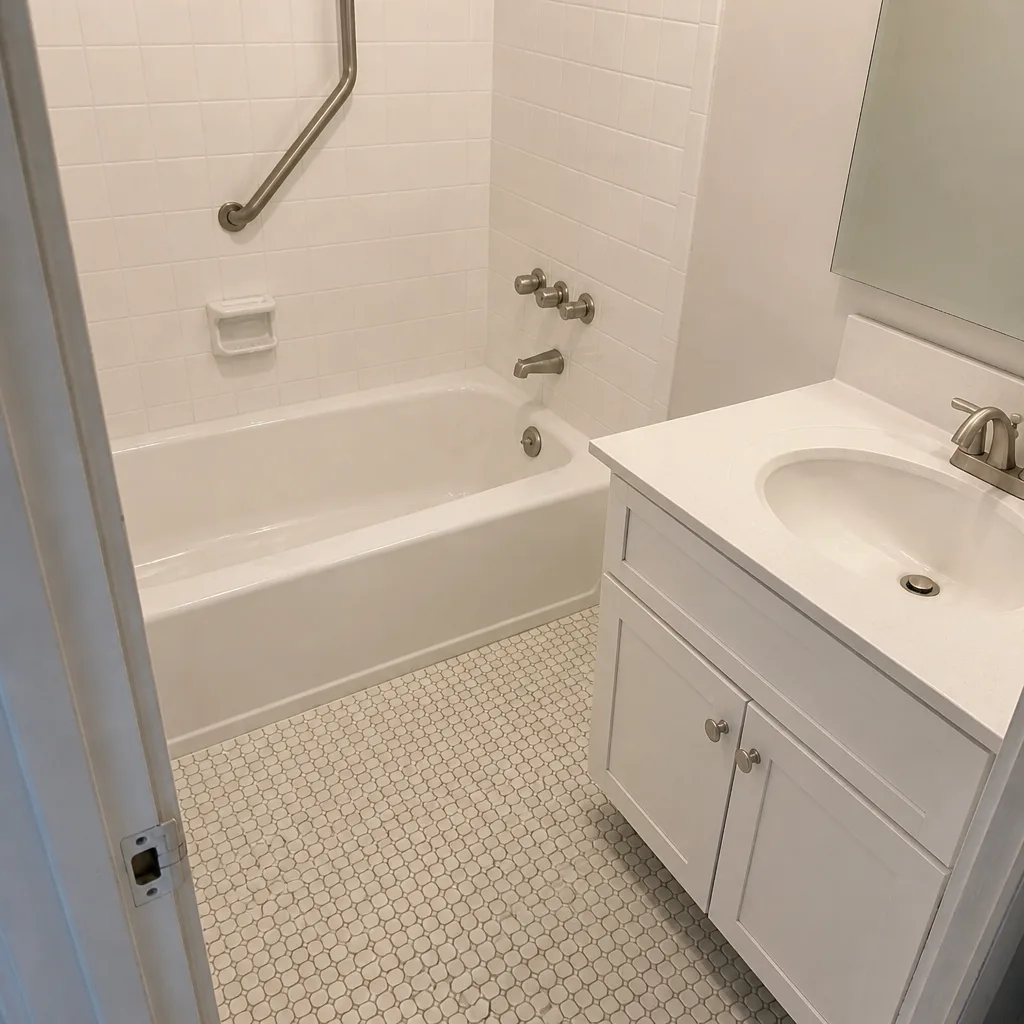 After
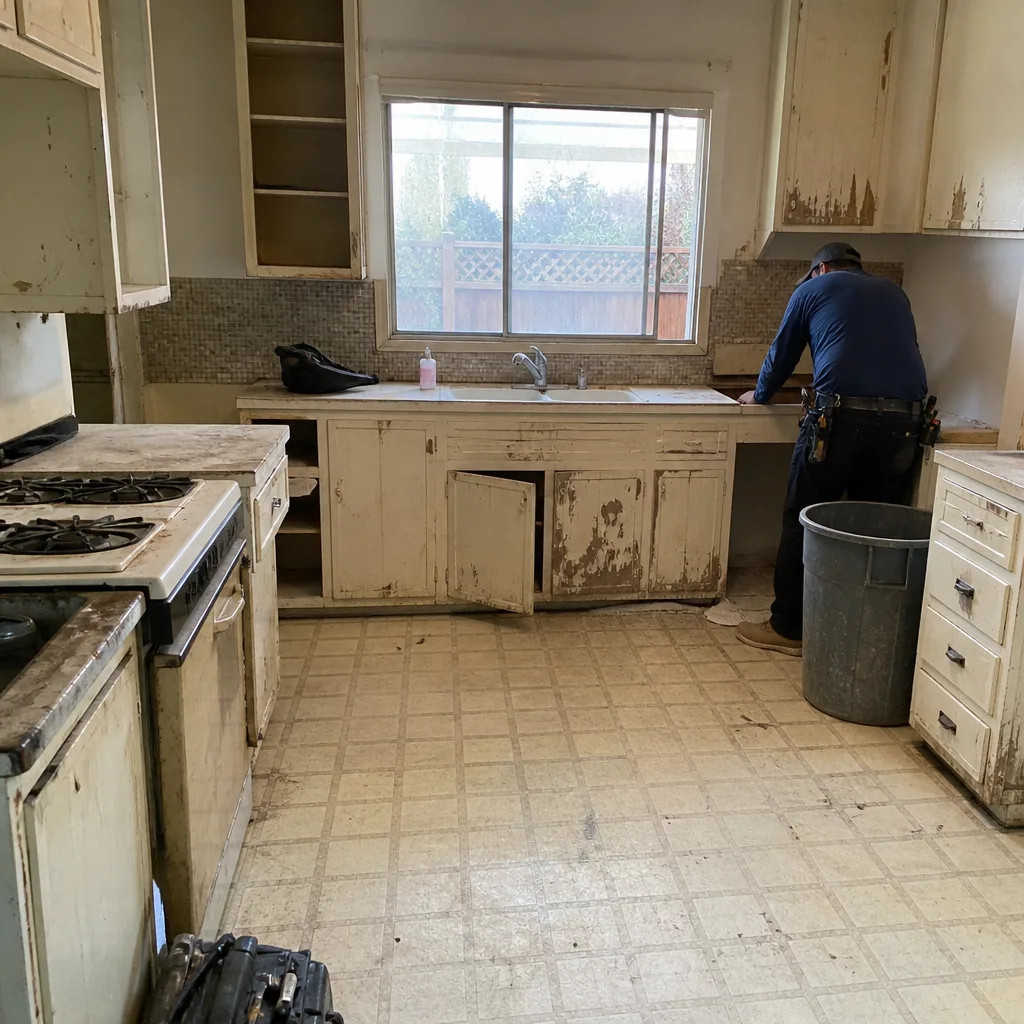 Before
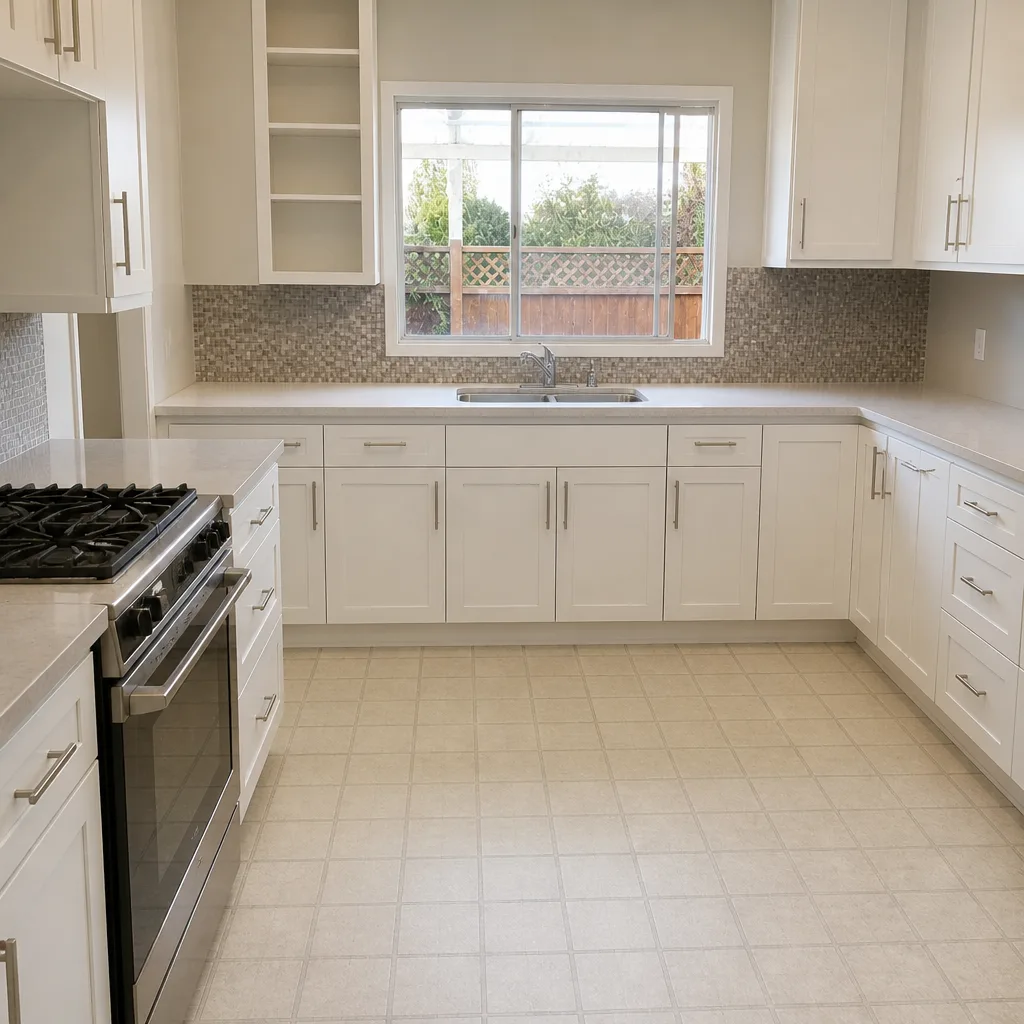 After
When to Call a Professional
Some permit work is straightforward enough for a homeowner to navigate the counter, and some isn’t. Call in a licensed contractor when the project touches structure, when it triggers Title 24, or when you’re legalizing existing unpermitted work. Anything involving foundation, framing, or a load path should be handled by a background-checked, insured professional who will pull the permit and show you the inspection record. Electrical, plumbing, and gas work belongs to licensed trades, full stop, because the safety stakes are real.
Rowan Construction Group Torrance offers free estimates in Torrance, and we’ll bring a written price and written scope before any work starts. Call (888) 349-6729 to schedule yours. Our technicians have up to 19 years of experience, and we answer calls with a live person around the clock.
Frequently Asked Questions
Yes. A room addition in California requires a building permit, and adding conditioned square footage generally triggers a Title 24 energy compliance calculation on top of the structural permit. The specific requirements depend on where the property sits, because each city amends the state code locally. Call (888) 349-6729 for a free estimate on a Torrance addition, and we’ll help you map the permit path before design.
Title 24 is California’s energy code, and it applies to any remodel that adds conditioned square footage, replaces a heating, cooling, or water-heating system, or replaces a significant share of windows and doors. A purely cosmetic refresh usually doesn’t engage it, but crossing a threshold does. Work with a contractor who sequences the compliance documentation up front so your permit isn’t held up at review.
As-built legalization in Torrance costs the city’s permit fee based on the valuation of the work being legalized, plus the cost of a structural risk assessment to confirm the as-built structure is safe and code-compliant. The risk-assessment portion is the larger variable because it can require opening walls to inspect framing. Call (888) 349-6729 for a free, written estimate on your specific scope, and we’ll review any existing estimate line by line at no charge.
The current Torrance amendments to the California Building Code are published on the City of Torrance’s official website, in the building and safety division’s code and fee schedule pages. Always pull the current version rather than relying on a neighbor’s rule of thumb, because code cycle updates change requirements. A Torrance contractor should confirm which code cycle the city is enforcing before design starts.
A failed inspection means the project stops until the correction is made and the work is re-inspected, which carries a city re-inspection fee and a schedule delay. The cost compounds because downstream trades wait on the failed stage. Most failures we see trace to documentation gaps, like framing that doesn’t match the plans, so keeping the approved plans and scope current is the best prevention. Call (888) 349-6729 if you’ve inherited a stalled permit and need a free second opinion on where to start.
Yes. Unpermitted work can leave a carrier with grounds to limit or deny coverage on the affected structure, and California requires disclosure of known unpermitted work at resale, which can reduce the sale price. Legalizing the work with a permit and a final inspection is the way to close that gap. If you’re buying a Torrance property, pull the permit history before you make an offer.
The Bottom Line
California’s permit system is layered, and Torrance’s local amendments are where most surprises live. Title 24 energy rules can engage on work that looks cosmetic, an inspection gate that gets skipped gets opened back up at your cost, and an unpermitted condition sits on the property until it’s legalized, affecting both insurance and resale. The documentation trail, the permit card, the approved plans, the Title 24 run, the signed change orders, and the written warranty, is what keeps the project legal and insurable. Pull the current local code before you design, and don’t skip the permit to save a few hundred dollars; it can cost far more than I planned for, and I’m saying that from what we’ve seen.
Ready to get the number in writing? Call (888) 349-6729 for a free estimate with Rowan Construction Group Torrance. We’ll bring a written price and written scope before any work starts, answer questions with a live person, and stand behind the work with the 365-Day Done Right Promise.
Written by the team at Rowan Construction Group Torrance.